
 +91 83682 81897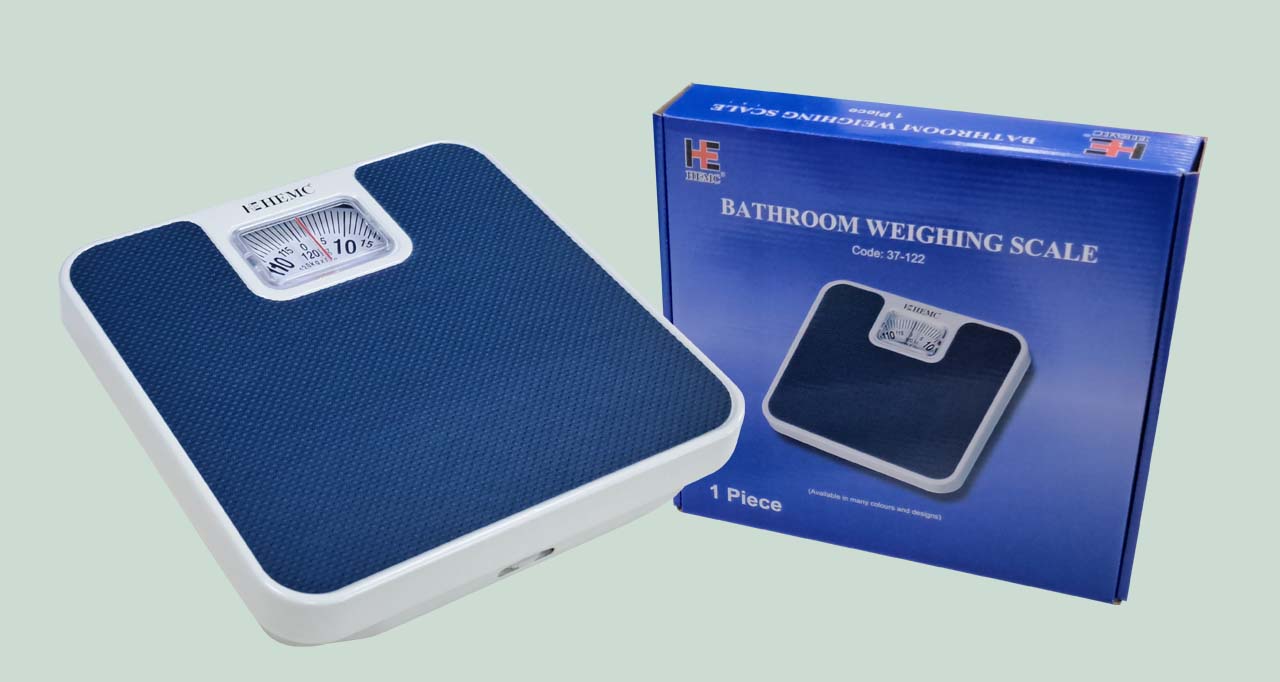
In today’s health-conscious world, monitoring body weight and growth parameters has become an integral part of daily life as well as clinical practice. Among the most commonly used health monitoring tools is the bathroom weighing scale, a simple yet highly effective device that provides critical insights into overall health, fitness, and well-being. From homes and fitness centers to hospitals and clinics, weighing scales have evolved from basic mechanical devices to advanced digital medical devices that play a vital role in preventive healthcare and patient management.
Understanding the Bathroom Weighing Scale
A bathroom weighing scale is a device designed to measure body weight accurately. Traditionally found in household bathrooms, these scales are now widely used across healthcare settings such as hospitals, clinics, nursing homes, and rehabilitation centers. Weight measurement is one of the most fundamental health indicators and is often the first step in diagnosing, monitoring, and managing various medical conditions.
In clinical environments, accurate weight measurement is crucial for determining medication dosages, evaluating nutritional status, monitoring chronic diseases, and assessing patient recovery. As a result, weighing scales are considered indispensable medical devices and standard hospital equipment.
Evolution from Mechanical to Digital Weighing Scales
Early bathroom weighing scales were mechanical, relying on springs and analog dials. While durable, these scales often lacked precision and required frequent calibration. With advancements in technology, digital bathroom weighing scales have largely replaced mechanical models due to their superior accuracy, ease of use, and advanced features. Digital scales use electronic sensors to measure weight and display readings on an LCD or LED screen. These devices offer higher precision, quick readings, and additional functionalities such as memory storage, body mass index (BMI) calculation, and connectivity with mobile applications.
Digital Bathroom Weighing Scale: Features and Benefits
The digital bathroom weighing scale is now the preferred choice for both personal and professional use. Its widespread adoption is driven by several key advantages:
High Accuracy and Precision
Digital sensors provide accurate and consistent weight readings, which are critical in medical and fitness applications.
User-Friendly Design
Clear digital displays, step-on activation, and automatic shut-off features make these scales easy to operate for users of all ages.
Advanced Health Metrics
Many modern digital scales can calculate BMI, body fat percentage, muscle mass, and water content, making them valuable health monitoring tools.
Sleek and Hygienic Construction
Designed with smooth surfaces and tempered glass or medical-grade plastic, digital bathroom weighing scales are easy to clean, aligning well with hospital hygiene standards.
Digital Infant Weighing Scale: Specialized Care for Newborns
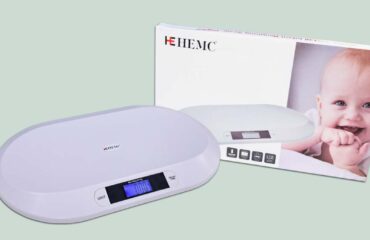
Monitoring weight in infants is critical for assessing growth, nutrition, and overall development. A digital infant weighing scale is specifically designed to measure the weight of newborns and young babies with extreme precision.
Importance in Neonatal and Pediatric Care
Infant weight gain is a key indicator of health. Even minor weight fluctuations can signal nutritional deficiencies or underlying medical conditions. Digital infant weighing scales allow healthcare professionals to detect these changes early.
Key Features
- High-precision sensors for accurate readings
- Ergonomic trays to safely support infants
- Tare functions to account for blankets or diapers
- Clear digital displays for quick interpretation
These scales are widely used in maternity wards, pediatric clinics, neonatal intensive care units (NICUs), and home healthcare setups, making them essential hospital equipment and specialized medical devices.
Height Measuring Scale: Completing the Health Assessment
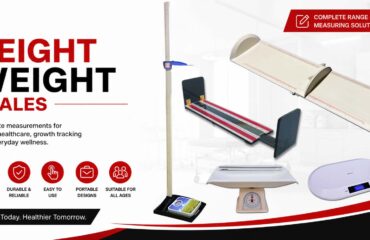
Weight alone does not provide a complete picture of a person’s health. When combined with height measurements, healthcare professionals can calculate BMI and assess growth patterns. A height measuring scale, often integrated with weighing scales, is a vital tool in both clinical and fitness environments.
Applications
- Growth monitoring in children and adolescents
- BMI calculation for adults
- Nutritional assessment
- Fitness and wellness evaluations
Height measuring scales are commonly installed in hospitals, clinics, schools, gyms, and diagnostic centers. As part of integrated measurement systems, they contribute significantly to accurate health assessments.
Role of Weighing Scales in Hospitals and Healthcare Facilities
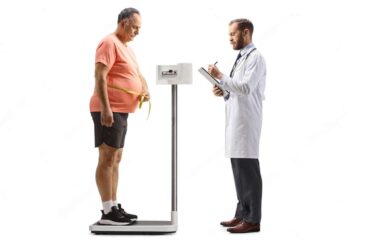
In hospitals, weighing scales are more than just convenience tools; they are critical components of hospital equipment and hospital furniture. From outpatient departments to intensive care units, accurate weight measurement is required at multiple stages of patient care.
- Clinical Applications
- Determining medication dosage
- Monitoring fluid balance
- Assessing nutritional status
- Tracking post-operative recovery
- Managing chronic conditions such as diabetes, heart disease, and kidney disorders
Due to their frequent use, hospital weighing scales must meet strict standards for accuracy, durability, and hygiene.
Integration with Hospital Furniture
Modern healthcare facilities focus on efficiency, ergonomics, and patient comfort. As a result, weighing scales are often integrated into hospital furniture, such as examination tables, patient beds, and wheelchairs.
Benefits of Integration
- Reduced patient movement
- Improved safety for elderly or immobile patients
- Faster clinical workflows
- Enhanced patient comfort
Integrated weighing solutions are particularly valuable in critical care units, dialysis centers, and long-term care facilities.
Bathroom Weighing Scales as Medical Devices
In regulated healthcare environments, weighing scales are classified as medical devices. This classification requires manufacturers to comply with quality standards, calibration protocols, and safety regulations.
Regulatory Importance
Medical-grade weighing scales must undergo rigorous testing to ensure accuracy and reliability. Regular calibration and maintenance are essential to maintain compliance and ensure patient safety.
Healthcare providers rely on these devices for critical decisions, making precision and consistency non-negotiable.
Home Healthcare and Personal Wellness Applications
Beyond hospitals, bathroom weighing scales play an important role in home healthcare and personal wellness management. With the rise of chronic diseases and aging populations, many individuals monitor their health parameters at home.
Benefits for Home Users
- Early detection of weight changes
- Support for fitness and weight-loss goals
- Monitoring health conditions under medical guidance
- Convenience and privacy
Digital bathroom weighing scales designed for home use often incorporate smart features such as Bluetooth connectivity and mobile app integration, bridging the gap between personal wellness and professional healthcare.
Technological Advancements in Weighing Scales
Modern weighing scales are no longer limited to measuring weight alone. Advances in sensor technology, data analytics, and connectivity have transformed these devices into comprehensive health monitoring systems.
Smart Weighing Scales
- Wireless data transfer
- Cloud-based health tracking
- Integration with electronic health records (EHRs)
- Remote patient monitoring
Such innovations are particularly useful in telemedicine and remote healthcare, where continuous data tracking supports proactive medical intervention.
Choosing the Right Bathroom Weighing Scale
Selecting the appropriate weighing scale depends on its intended use:
- For home use: A digital bathroom weighing scale with basic health metrics
- For infants: A dedicated digital infant weighing scale with high precision
- For clinics and hospitals: Medical-grade weighing scales with height measuring scale integration
- For mobility-restricted patients: Wheelchair-compatible or bed-integrated scales
Factors such as accuracy, weight capacity, ease of cleaning, and compliance with medical standards should always be considered.
Maintenance and Calibration
Regular maintenance is essential to ensure the longevity and accuracy of weighing scales. In hospitals, routine calibration is mandatory to maintain compliance with medical standards.
- Best Practices
- Periodic calibration
- Regular cleaning and disinfection
- Proper storage
- Timely servicing
Well-maintained weighing scales not only provide reliable measurements but also enhance patient safety and trust.
Conclusion
The bathroom weighing scale has evolved from a simple household accessory into a critical health monitoring tool across personal, clinical, and institutional settings. Whether it is a digital bathroom weighing scale for daily wellness tracking, a digital infant weighing scale for neonatal care, or an integrated height measuring scale for comprehensive health assessments, these devices play a vital role in modern healthcare.
As essential hospital equipment, reliable medical devices, and integral components of hospital furniture, weighing scales support accurate diagnosis, effective treatment, and improved patient outcomes. With ongoing technological advancements, bathroom weighing scales will continue to play an increasingly important role in preventive healthcare, clinical decision-making, and overall well-being.
In a world where health awareness is growing rapidly, investing in high-quality weighing scales is not just a convenience—it is a commitment to better health management and patient care.