
 +91 83682 81897
Sterilization is one of the most important processes in healthcare, laboratories, pharmaceutical manufacturing, and research facilities. Every medical instrument that comes into contact with patients or biological materials must be completely free from bacteria, viruses, fungi, and other harmful microorganisms. This is where Sterilizers & Autoclaves play a crucial role.
Whether it is a hospital operating theatre, dental clinic, pathology laboratory, veterinary center, or pharmaceutical facility, choosing the right sterilization equipment ensures patient safety, compliance with healthcare standards, and long-term instrument performance.
Modern sterilization systems are available in various models designed for different applications. From an Instrument sterilizer used in clinics to advanced high pressure autoclave digital systems used in hospitals, every sterilizer has a specific purpose. This guide explores the different types, features, benefits, and applications of sterilizers and autoclaves.
What Are Sterilizers?
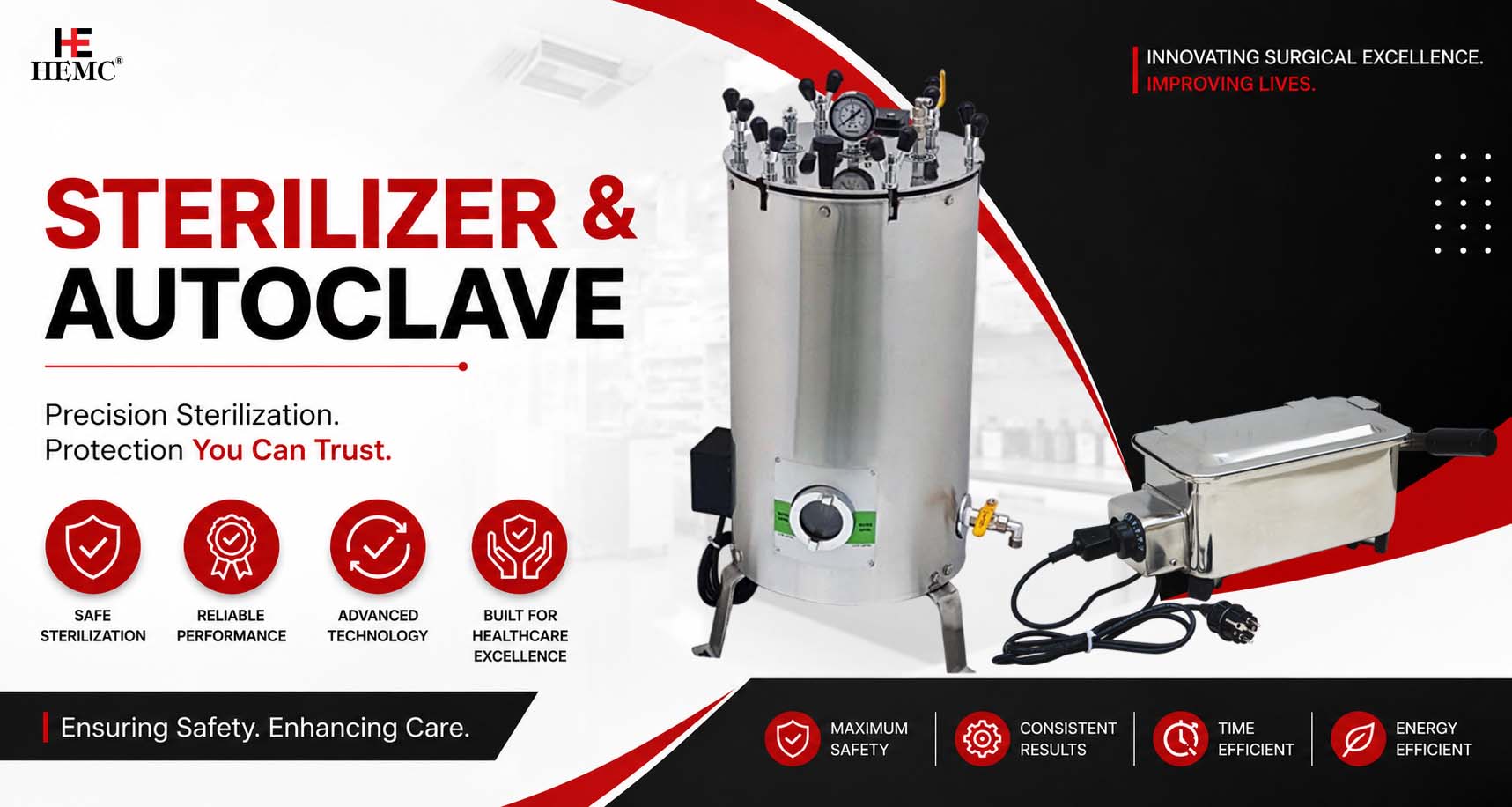
Sterilizers are devices designed to destroy all forms of microbial life, including bacteria, viruses, spores, and fungi, from medical instruments and laboratory equipment. Unlike simple cleaning or disinfection, sterilization completely eliminates microorganisms, making instruments safe for reuse.
Sterilization methods include:
- Steam sterilization
- Dry heat sterilization
- Chemical sterilization
- Gas sterilization
- Plasma sterilization
Among these methods, steam sterilization using an autoclave remains the most widely accepted and effective technique for medical instruments.
What Is an Autoclave?
An autoclave is a pressure chamber that uses saturated steam under high pressure to sterilize equipment and instruments. The combination of pressure, heat, and steam effectively destroys even the most resistant microorganisms.
Autoclaves are commonly used in:
- Hospitals
- Clinics
- Dental practices
- Medical colleges
- Pharmaceutical industries
- Biotechnology laboratories
- Veterinary hospitals
- Research institutions
Steam sterilization is preferred because it is reliable, fast, environmentally friendly, and suitable for most surgical instruments.
Importance of Sterilizers & Autoclaves
Proper sterilization offers numerous benefits, including:
- Prevention of hospital-acquired infections (HAIs)
- Protection of healthcare workers
- Increased patient safety
- Compliance with international healthcare standards
- Extended life of surgical instruments
- Reduced risk of cross-contamination
- Improved operational efficiency
Healthcare facilities rely on high-quality sterilization equipment to maintain hygiene standards and ensure successful medical procedures.
Instrument Sterilizer
An Instrument sterilizer is specially designed for sterilizing surgical instruments, dental tools, laboratory equipment, and medical accessories.
These sterilizers are compact, efficient, and easy to operate, making them ideal for:
- General clinics
- ENT clinics
- Gynecology centers
- Dental clinics
- Small hospitals
- Pathology laboratories
Instrument sterilizers provide consistent sterilization while maintaining the integrity of delicate medical instruments.
Instrument Sterilizer Table Model S.S.
The instrument sterilizer table model s.s. is manufactured using premium-grade stainless steel, ensuring durability, corrosion resistance, and hygienic operation.
Key features include:
- Stainless steel construction
- Rust-resistant body
- Uniform heating
- Long service life
- Easy cleaning
- Compact tabletop design
- Suitable for daily sterilization requirements
Applications include:
- Clinics
- Dental hospitals
- Diagnostic centers
- Medical colleges
- Laboratory environments
Its portable design makes it one of the most commonly used sterilization units in healthcare facilities.
Instrument Sterilizer Electric
An instrument sterilizer electric offers fast and reliable sterilization through electrically controlled heating systems.
Advantages include:
- Rapid heating
- Uniform temperature distribution
- Low maintenance
- User-friendly controls
- Energy-efficient operation
- Consistent sterilization cycles
Electric instrument sterilizers are widely preferred because they reduce manual effort while improving sterilization efficiency.
Types of Autoclaves
Autoclaves are available in several designs depending on sterilization capacity and application.
Autoclave Electric
An autoclave electric uses electric heating elements to generate steam for sterilization.
Features include:
- Automatic heating
- Pressure control
- Safety valves
- Temperature monitoring
- Durable construction
- High sterilization efficiency
Electric autoclaves are suitable for hospitals, laboratories, educational institutions, and pharmaceutical companies.
Autoclave Non-Electric Wing-Nut Type Aluminium
The autoclave non-electric wing-nut type aluminium is designed for locations where electricity may not always be available.
Constructed from high-quality aluminum, it offers:
- Lightweight construction
- Excellent portability
- Corrosion resistance
- Wing-nut locking mechanism
- Efficient steam generation
- Reliable sterilization
These autoclaves are commonly used in:
- Rural healthcare centers
- Field hospitals
- Mobile medical camps
- Veterinary clinics
Their simple design ensures dependable performance even in remote locations.
Autoclave Electric Pressure Cooker Type Aluminium
The autoclave electric pressure cooker type aluminium combines portability with electric convenience.
Its major advantages include:
- Compact size
- Fast steam generation
- Lightweight aluminum body
- Easy transportation
- Simple operation
- Affordable pricing
It is widely used in:
- Dental clinics
- Medical laboratories
- Small healthcare centers
- Nursing homes
- Veterinary facilities
Its pressure cooker-style design makes it highly practical for everyday sterilization needs.
High Pressure Autoclave Digital
The high pressure autoclave digital represents the latest advancement in sterilization technology.
It incorporates digital controls for improved precision and monitoring.
Features include:
- Digital temperature display
- Digital pressure monitoring
- Automatic sterilization cycles
- Timer functions
- Safety alarms
- Programmable settings
- Uniform steam distribution
Benefits include:
- Higher sterilization accuracy
- Reduced operator error
- Better process documentation
- Enhanced safety
- Faster workflow
Digital autoclaves are widely used in hospitals, pharmaceutical companies, microbiology laboratories, and research institutions.
Vertical High Pressure Autoclave Manually Operated
The vertical high pressure autoclave manually operated is designed for large-volume sterilization requirements.
Its vertical chamber allows sterilization of larger loads while maintaining excellent steam circulation.
Key features include:
- Large chamber capacity
- Manual pressure operation
- Heavy-duty construction
- Stainless steel chamber
- Efficient steam penetration
- Reliable safety mechanisms
Applications include:
- Hospitals
- Blood banks
- Research laboratories
- Pharmaceutical industries
- Medical colleges
Its durable construction makes it suitable for continuous industrial and healthcare use.
Universal Hot Air Oven Sterilizer Digital
Not all medical equipment is suitable for steam sterilization. Heat-sensitive moisture-free instruments require dry heat sterilization.
The universal hot air oven sterilizer digital is specially designed for this purpose.
It uses controlled dry heat to sterilize:
- Glassware
- Surgical instruments
- Laboratory equipment
- Metal tools
- Powders
- Oils
Major features include:
- Digital temperature controller
- Uniform hot air circulation
- Accurate heating
- Adjustable timer
- Stainless steel chamber
- Energy-efficient operation
Hot air oven sterilizers are extensively used in:
- Laboratories
- Pharmaceutical industries
- Medical colleges
- Biotechnology centers
- Research laboratories
Choosing the Right Sterilizer
Selecting the appropriate sterilization equipment depends on several factors.
Capacity
- Choose equipment based on daily sterilization requirements.
Instrument Type
- Different instruments require different sterilization methods.
Automation
- Digital systems provide better consistency and ease of operation.
Material Compatibility
- Steam sterilization is ideal for stainless steel instruments, while dry heat is suitable for glassware and metal equipment.
Budget
- Healthcare facilities should balance cost with long-term efficiency and reliability.
Maintenance Tips for Sterilizers & Autoclaves
Regular maintenance ensures reliable sterilization performance.
Recommended maintenance includes:
- Cleaning chambers after every cycle
- Inspecting safety valves regularly
- Checking pressure gauges
- Monitoring temperature calibration
- Replacing worn gaskets
- Using distilled water where required
- Following manufacturer maintenance schedules
Routine servicing extends equipment lifespan and ensures consistent sterilization quality.
Applications Across Industries
Sterilizers and autoclaves serve a wide range of industries.
Hospitals
- Surgical instruments
- Operating theatre equipment
- Dressing materials
Dental Clinics
- Dental handpieces
- Forceps
- Mirrors
- Scalers
Laboratories
- Glassware
- Culture media
- Pipettes
- Laboratory tools
Pharmaceutical Industry
- Production equipment
- Containers
- Laboratory instruments
Veterinary Clinics
- Surgical kits
- Animal treatment instruments
Educational Institutions
Medical and nursing colleges use sterilizers for practical demonstrations and laboratory training.
Advantages of Modern Sterilization Equipment
Modern sterilizers provide numerous operational benefits:
- Faster sterilization cycles
- Greater energy efficiency
- Enhanced safety
- Improved infection control
- Reduced maintenance
- Digital monitoring
- High durability
- Better compliance with healthcare standards
- Consistent sterilization quality
These advantages contribute to improved patient care and operational productivity.
Why Quality Sterilization Matters
Sterilization is far more than a regulatory requirement—it is a critical component of patient safety. Properly sterilized instruments significantly reduce the risk of infections, surgical complications, and cross-contamination.
Healthcare providers that invest in reliable sterilization equipment also benefit from lower instrument replacement costs, increased workflow efficiency, and greater confidence in their infection prevention protocols.
Whether using an Instrument sterilizer, instrument sterilizer table model s.s., instrument sterilizer electric, autoclave electric, autoclave non-electric wing-nut type aluminium, autoclave electric pressure cooker type aluminium, high pressure autoclave digital, vertical high pressure autoclave manually operated, or a universal hot air oven sterilizer digital, selecting the appropriate equipment is essential for maintaining the highest standards of healthcare and laboratory operations.
Conclusion
Sterilizers and autoclaves are indispensable in modern medical, laboratory, pharmaceutical, and research environments. They ensure complete elimination of harmful microorganisms, protect patients and healthcare professionals, and support compliance with international hygiene standards.
As healthcare technology continues to evolve, modern sterilization equipment now offers greater automation, enhanced safety features, improved efficiency, and precise digital controls. From compact tabletop sterilizers to advanced digital high-pressure autoclaves and hot air ovens, there is a sterilization solution for every application.
Investing in high-quality Sterilizers & Autoclaves not only improves operational efficiency but also reinforces patient safety, minimizes infection risks, and ensures dependable performance for years to come.