
 +91 83682 81897
In the healthcare sector, the timely movement and transfer of patients are often critical to saving lives. Among the many tools that support emergency medical care, the ambulance stretcher stands out as one of the most essential. Used both in ambulances and hospitals, it ensures safe patient transport during emergencies. Along with other vital hospital equipment such as hospital stretchers, emergency trolleys, emergency carts, and hospital beds, the ambulance stretcher plays a vital role in enhancing efficiency, safety, and comfort for both patients and healthcare providers.

What is an Ambulance Stretcher?
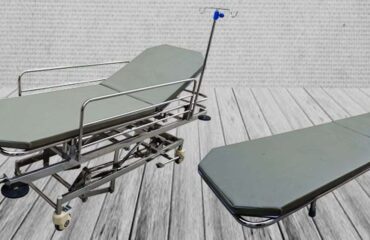
An ambulance stretcher is a specially designed patient transport device used primarily in ambulances for carrying patients safely to hospitals or other healthcare facilities. It is built to provide mobility, stability, and comfort, ensuring patients are moved with minimal risk. These stretchers are often adjustable, lightweight, and equipped with wheels to allow easy maneuverability even in crowded or uneven areas.
Ambulance stretchers are more advanced than regular hospital stretchers because they are designed for mobility, rapid use, and emergency conditions. They are often collapsible and may be loaded and unloaded quickly from an ambulance.
Importance of an Ambulance Stretcher
- Life-Saving in Emergencies – Provides rapid, safe, and comfortable transfer for critical patients.
- Mobility and Flexibility – Designed for use in ambulances, staircases, and narrow passages.
- Patient Comfort – Adjustable height and cushioning minimize discomfort during transport.
- Support for Caregivers – Reduces physical strain on paramedics and hospital staff.
- Integration with Other Hospital Equipment – Works alongside emergency trolleys, emergency carts, hospital stretchers, and hospital beds to provide comprehensive care.
Features of a Modern Ambulance Stretcher
- Collapsible Frame – Easy loading/unloading in ambulances.
- Adjustable Height – To align with hospital beds or trolleys.
- Safety Straps and Side Rails – Secure patients during transit.
- Lightweight and Durable Material – Made of aluminum alloy or stainless steel for strength.
- Hydraulic or Electric Adjustment Systems – Advanced stretchers allow smooth positioning.
- Wheeled Base – Enhances mobility even in confined spaces.
Types of Ambulance Stretchers
Standard Ambulance Stretchers
- Basic, durable stretchers with wheels and collapsible frames.
- Widely used in general ambulances.
Scoop Stretchers
- Designed to scoop up patients without requiring movement.
- Useful for patients with spinal injuries.
Basket Stretchers
- Sturdy stretchers for rough terrain and rescue operations.
- Often used in military, disaster zones, and mountainous areas.
Folding Ambulance Stretchers
- Lightweight and portable.
- Ideal for narrow or hard-to-reach areas.
Powered Ambulance Stretchers
- Equipped with hydraulic or electric lifting mechanisms.
- Reduces caregiver strain and improves efficiency.
Ambulance Stretcher vs Hospital Stretcher
While both serve the purpose of transporting patients, there are notable differences:
- Ambulance Stretcher: Designed for mobility, portability, and emergency transfer. Easily collapsible for loading into ambulances.
- Hospital Stretcher: Primarily used within hospitals, often as part of emergency trolleys or for intra-hospital patient movement. Built more for comfort and stability than portability.
Both are vital hospital equipment and often work together for smooth patient transfer from an ambulance into a hospital bed.
Role of Ambulance Stretchers in Emergency Care
Ambulance stretchers are a cornerstone of pre-hospital care. In emergencies such as accidents, heart attacks, or strokes, paramedics rely on stretchers to quickly move patients into ambulances and then to hospital beds or emergency trolleys upon arrival. Their design allows for:
- Quick Loading/Unloading – Reducing delays in treatment.
- Safe Transport – Prevents further injury during movement.
- Continuity of Care – Transfers patients seamlessly to hospital stretchers or beds.
Integration with Other Hospital Equipment
The ambulance stretcher is part of a larger ecosystem of hospital equipment that supports emergency and routine patient care:
- Hospital Stretchers – Used within hospital premises to move patients from one department to another.
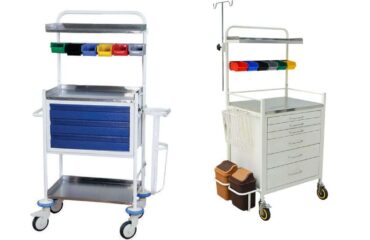
- Emergency Trolley – A mobile cart used to transport medical equipment and supplies during emergencies.
- Emergency Cart – Also called a crash cart, it stores life-saving medicines, defibrillators, and tools needed during critical situations.
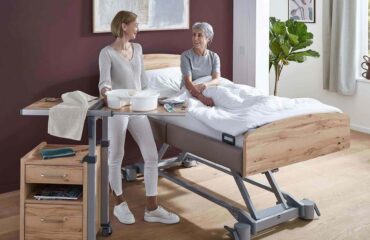
- Hospital Beds – Ambulance stretchers are often designed to align with hospital bed height, ensuring smooth patient transfers.
Together, these tools create a complete system that ensures no delay or compromise in emergency care.
Benefits of Using an Ambulance Stretcher
- Rapid Response – Speeds up patient transfer in emergencies.
- Patient Safety – Side rails and straps keep patients secure.
- Comfort – Adjustable design reduces patient discomfort during transport.
- Durability – Built with high-quality materials for long-lasting use.
- Improved Caregiver Efficiency – Reduces manual lifting and risk of injury to staff.
- Versatility – Suitable for various situations, from road accidents to hospital transfers.
Applications of Ambulance Stretchers
- Ambulance Services – The primary use is to safely transport patients to hospitals.
- Disaster Management – Essential in natural disasters, accidents, and rescue operations.
- Military and Defense – Used for rapid evacuation of injured soldiers.
- Hospitals and Clinics – Work with hospital stretchers, beds, and emergency trolleys for complete patient management.
- Air Ambulances – Special stretchers designed for helicopters or airplanes for critical patient transfers.
Maintenance of Ambulance Stretchers
To ensure safety and functionality, ambulance stretchers require regular maintenance:
- Routine Cleaning and Disinfection – To prevent infection.
- Inspection of Wheels and Locks – Ensures smooth mobility and patient security.
- Check Safety Straps and Rails – Must be functional to protect patients.
- Lubrication of Moving Parts – Keeps folding mechanisms smooth.
- Periodic Testing – For hydraulic or electric models.
Future Trends in Ambulance Stretchers
With advancements in hospital equipment, ambulance stretchers are evolving too. Future designs may include:
- Smart Stretchers – With integrated monitors for patient vitals.
- Lightweight Composite Materials – For easier handling.
- Automatic Loading Systems – Minimizing caregiver effort.
- Advanced Suspension Systems – To reduce patient discomfort during transport.
Conclusion
The ambulance stretcher is more than just a piece of equipment; it is a life-saving tool that ensures patients are transferred safely, quickly, and comfortably during emergencies. Alongside hospital stretchers, emergency trolleys, emergency carts, hospital beds, and other hospital equipment, it forms an integral part of patient care in both pre-hospital and hospital environments.
By combining safety, durability, and functionality, ambulance stretchers continue to play a vital role in modern healthcare. As technology evolves, they will only become more advanced, further improving emergency response and patient outcomes.