
 +91 83682 81897
A portable sharps collector is a small, puncture-resistant container designed for safe disposal and transport of “sharps”—items like needles, syringes, lancets, IV cannulas, and scalpel blades. They come in various styles and sizes but share essential safety features:
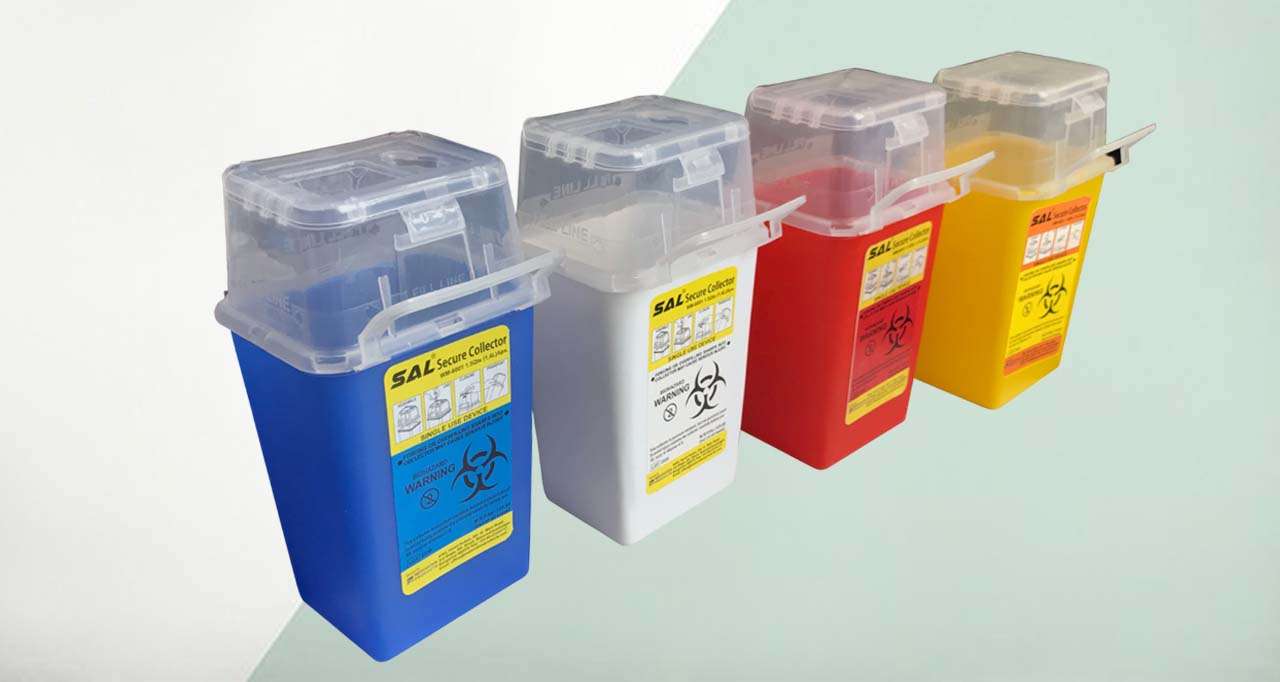
Here are the key features of a Portable Sharps Collector, explained in detail:
Puncture-Resistant Material
- Made from rigid plastic that resists penetration from needles or blades.
- Ensures safety for users and handlers, preventing accidental injuries.
- Meets standards for sharps containment (often FDA-cleared or CE-marked).
Secure, Leak-Proof Lid
- Equipped with snap-lock, screw-top, or push-cap lids.
- Prevents spills and tampering after the container is closed.
- Many lids feature one-way entry mechanisms to block sharps from being retrieved once inserted.
Compact and Lightweight Design
- Designed to be easily portable—can fit in bags, purses, pockets, or emergency kits.
- Available in various capacities (typically 0.2L to 1.5L) for different user needs.
- Ideal for people who self-inject medications while traveling.
Clearly Marked Biohazard Labeling
- Labeled with the biohazard symbol and safety instructions.
- Color-coded (usually red or yellow) for easy recognition.
- Promotes compliance with medical waste disposal guidelines.
Easy and Safe Disposal Mechanism
- Some include needle removal ports or built-in clipping tools for separating needle tips.
- Wide openings or funnels facilitate one-handed disposal during use.
- Designed for minimal contact with used sharps.
Tamper-Resistant and Child-Safe
- Lids may include locking tabs or child-resistant closures to prevent unauthorized access.
- Helps safeguard children, pets, and others from accidental contact.
Disposable or Reusable Options
- Single-use models are thrown away when full, while reusable models can be sterilized and refilled.
- Users can choose based on frequency of use, cost, or environmental preferences.
Volume Indicators or Fill Lines
- Many containers have translucent sides with marked fill levels.
- Alerts users when the container is approaching full capacity (typically ¾ full is max recommended).
Versatile Compatibility
- Designed to accommodate a range of sharps: insulin needles, lancets, pen needles, scalpels, syringes, and IV cannulas.
Summary Table:
Feature Description
Puncture-resistant body Prevents injuries and leakage
Secure lid Leak-proof and tamper-resistant
Compact size Easy to carry in bags or kits
Biohazard labeling Ensures clear identification and safe handling
One-way entry or clipping Protects user during disposal
Child-safe lock Prevents unauthorized access
Fill lines Indicates when it’s time to dispose safely
Reusable/disposable options Suitable for various personal or professional use cases
Benefits – Portable Sharp’s Collector
Portable Sharps Collectors offer multiple benefits, especially for individuals and healthcare professionals who need safe, convenient sharps disposal outside traditional clinical environments. Here are the key benefits in detail:
Enhanced Safety
- Minimizes needlestick injuries by allowing immediate disposal after use.
- Reduces risk of accidental exposure to contaminated needles and sharps.
- Protects children, pets, and others from accessing used sharps in homes or public areas.
Convenience for On-the-Go Use
- Enables patients (e.g., diabetics, people on injectables) to safely dispose of sharps while traveling, at work, or away from home.
- Compact sizes make them easy to carry in purses, backpacks, or kits.
Supports Proper Hygiene and Infection Control
- Prevents contamination of surroundings by keeping used sharps securely enclosed.
- Helps maintain sterile and safe environments in mobile clinics, ambulances, and field services.
Tamper-Resistant Design
- Most units have secure, locking lids or one-way entry ports to prevent sharps from being removed or spilling.
- Some models include child-resistant features for added protection.
Environmental Responsibility
- Encourages proper medical waste segregation, preventing sharps from ending up in household trash or the environment.
- Helps comply with local biohazard and waste disposal regulations.
Cost-Effective and Reusable Options
- Available in affordable disposable types or durable reusable forms that can be emptied and sterilized professionally.
- Reduces long-term costs for individuals who require frequent disposal (e.g., insulin users).
Versatile for Multiple Settings
- Useful in a variety of settings: homes, schools, camps, disaster response, military, and public events.
- Supports continuity of care by ensuring medical waste management outside hospitals.
Summary of Benefits
Benefit Description
Safety Prevents injury and infection
Portability Easy to carry and use anywhere
Hygiene Keeps environments clean and sharps-free
Security Tamper-resistant to avoid misuse
Eco-friendly Promotes proper disposal, reducing environmental hazard
Economical Reusable and disposable options available
Multi-environment Usage Ideal for personal, community, and professional healthcare scenarios
Sharp’s Collector Types
In medical waste management, sharps collectors are crucial for safely disposing of items that can puncture or cut skin, such as needles, blades, and syringes.
Below are the main types of sharps collectors used in healthcare waste management, explained in detail:
Disposable (Single-Use) Sharps Collectors
- Design: Rigid, puncture-resistant plastic containers with secure lids
- Capacity: Varies from 0.2 liters (personal) to 20 liters (clinical)
- Use: Once filled (usually up to ¾), they are sealed and disposed of with regulated medical waste
- Advantages:
- No need for cleaning or reuse
- Minimizes cross-contamination
- Cost-effective for high-turnover facilities
- Common in: Hospitals, outpatient clinics, pathology labs
Reusable Sharps Collectors
- Design: Heavier-duty plastic containers designed for multiple uses
- Use:
- Collected when full
- Cleaned, sterilized, and returned for reuse by a third-party service
- Capacity: Typically, 5–20 liters
- Advantages:
- Eco-friendly: reduces plastic waste
- Long-term cost savings
- Durable and tamper-proof
- Common in: Hospitals with waste service contracts
Wall-Mounted Sharps Collectors
- Design: Securely mounted on walls or carts, often with a hinged lid or foot pedal
- Use: For frequent sharps disposal at the point of care (e.g., patient rooms, treatment bays)
- Capacity: 1–10 liters
- Advantages:
- Improves workflow and accessibility
- Reduces risk of needle handling
- Common in: Emergency rooms, operating theaters, nursing stations.
Bench-Top Sharps Collectors
- Design: Compact units placed on countertops or shelves in labs and exam rooms
- Use: Designed for easy access during procedures
- Capacity: 5–3 liters
- Advantages:
- Convenience during clinical tasks
- Available with lockable lids
- Common in: Laboratories, outpatient departments
Mobile or Wheeled Sharps Containers
- Design: Large-capacity (15–50 liters) sharps bins on wheeled carts or stands
- Use: Used during mass vaccination drives, surgery, or ward rounds
- Advantages:
- High-volume disposal
- Reduces back-and-forth trips to disposal rooms
- Common in: Surgical wards, vaccination centers, field hospitals
Puncture-Proof Safety Boxes (Cardboard or Plastic)
- Design: Foldable boxes lined with puncture-proof plastic; often used in developing regions
- Use: Filled with used sharps and incinerated or disposed of in sealed containers
- Capacity: ~5 liters
- Advantages:
- Inexpensive and easy to distribute
- Ideal for rural or temporary setups
Common in: Public health campaigns, rural clinics