
 +91 83682 81897
Diagnostic products form the foundation of modern healthcare by enabling medical professionals to assess, monitor, and diagnose patient conditions accurately. From routine physical examinations to specialized clinical procedures, these medical instruments provide critical information that supports timely treatment and improved patient outcomes.
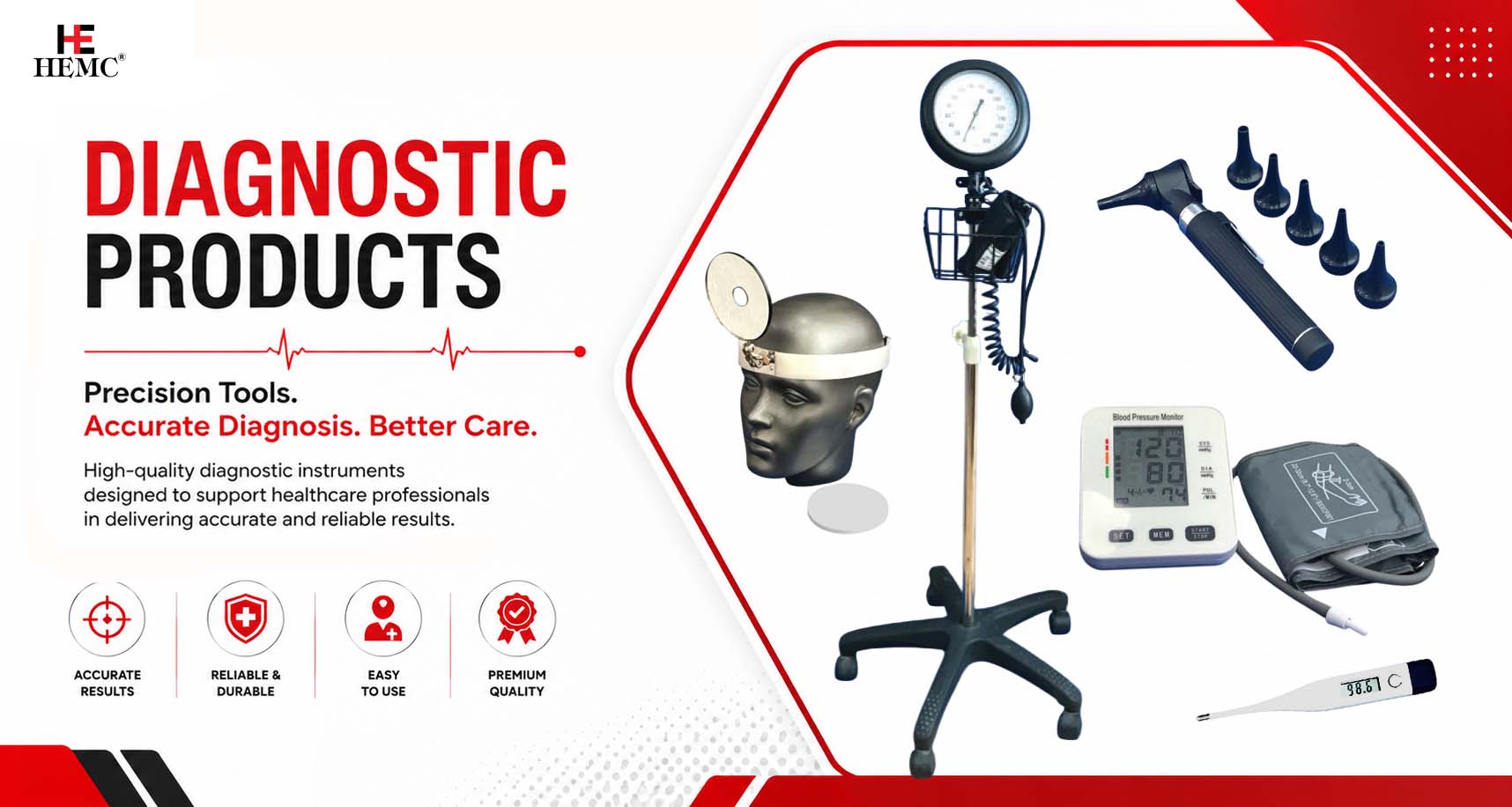
Hospitals, clinics, laboratories, dental centers, and primary healthcare facilities depend on a wide range of diagnostic tools to deliver quality medical services. Products such as the sphygmomanometer, finger tip (pulse) oximeter, stethoscope, otoscope, opthalmoscope, and clinical thermometer have become indispensable components of everyday medical practice.
Additionally, supporting accessories including blood pressure armlet bag, blood pressure blubs, percussion hammer, head mirror, tongue depressor, and dental mirror contribute significantly to comprehensive patient examinations. This article explores the importance, applications, benefits, and future developments of diagnostic products in modern healthcare systems.
Understanding Diagnostic Products
Diagnostic products are medical instruments and devices used to evaluate, monitor, and identify various health conditions. These products help healthcare professionals collect vital information about a patient’s physical condition, allowing for accurate diagnoses and effective treatment planning.
Modern diagnostic equipment ranges from simple manual tools to advanced digital technologies. Regardless of complexity, every diagnostic instrument plays a crucial role in maintaining high standards of patient care.
Healthcare facilities invest heavily in quality diagnostic products to improve clinical efficiency, enhance patient safety, and support evidence-based medical practices.
Importance of Diagnostic Products in Healthcare
Early Disease Detection
- Timely diagnosis significantly increases treatment success rates. Diagnostic instruments help physicians identify medical conditions before they become severe, enabling preventive interventions and better patient management.
Accurate Patient Assessment
- Products such as the sphygmomanometer, stethoscope, and finger tip (pulse) oximeter provide precise measurements that guide medical decisions and treatment protocols.
Continuous Monitoring
- Diagnostic devices support ongoing patient monitoring in hospitals, emergency departments, and home healthcare environments, ensuring timely responses to changes in health status.
Improved Clinical Efficiency
- Reliable diagnostic products reduce examination time and enable healthcare professionals to deliver more effective patient care.
Sphygmomanometer: The Standard Blood Pressure Diagnostic Tool
The sphygmomanometer remains one of the most widely used diagnostic instruments in healthcare. It measures blood pressure, providing essential information about cardiovascular health.
Traditional manual sphygmomanometers consist of several components, including:
- Pressure gauge
- Inflation cuff
- Blood pressure blubs
- Tubing systems
- Blood pressure armlet bag for convenient storage and transportation
The blood pressure armlet bag protects equipment from damage and supports organized medical practice, particularly in mobile healthcare services and community outreach programs.
Similarly, high-quality blood pressure blubs ensure accurate cuff inflation and long-term device reliability.
Digital sphygmomanometers have further improved efficiency by providing automatic readings and data storage capabilities.
Finger Tip (Pulse) Oximeter: Monitoring Oxygen Saturation
The finger tip (pulse) oximeter is an essential diagnostic product used to measure blood oxygen saturation and pulse rate.
These portable devices are widely utilized in:
- Hospitals
- Emergency departments
- Intensive care units
- Home healthcare settings
- Respiratory clinics
The COVID-19 pandemic significantly increased the global importance of finger tip (pulse) oximeter devices, highlighting their value in monitoring respiratory health.
Modern pulse oximeters feature digital displays, rapid measurements, and user-friendly designs that improve both professional and personal healthcare management.
Stethoscope: The Iconic Medical Instrument
The stethoscope remains one of the most recognizable symbols of the medical profession.
Healthcare professionals use stethoscopes to:
- Listen to heart sounds
- Assess lung function
- Monitor bowel activity
- Measure blood pressure alongside a sphygmomanometer
High-quality stethoscopes offer superior acoustic performance, enabling physicians to detect subtle abnormalities that support accurate diagnosis.
Modern electronic stethoscopes incorporate noise reduction technologies and digital recording capabilities, enhancing diagnostic precision.
Percussion Hammer in Neurological Assessment
The percussion hammer, also known as a reflex hammer, is a fundamental diagnostic tool used in neurological examinations.
Medical practitioners use percussion hammers to evaluate:
- Deep tendon reflexes
- Neuromuscular function
- Central nervous system health
- Peripheral nerve responses
Various designs exist, including Taylor, Babinski, and Queen Square models, each serving specific clinical preferences and examination techniques.
The percussion hammer remains an indispensable instrument in neurology, orthopedics, and general medicine.
Otoscope: Essential for Ear Examinations
The otoscope is a specialized diagnostic device used to examine the ear canal and tympanic membrane.
Healthcare professionals rely on otoscopes to diagnose:
- Ear infections
- Wax blockages
- Eardrum perforations
- Foreign body obstructions
- Hearing-related conditions
Modern otoscopes incorporate LED illumination and magnification systems that improve visualization and diagnostic accuracy.
Portable otoscope models support primary healthcare services, emergency medicine, and pediatric care.
Opthalmoscope: Examining Eye Health
The opthalmoscope enables healthcare providers to inspect the retina, optic nerve, and internal eye structures.
Routine eye examinations with an opthalmoscope help identify:
- Diabetes-related retinal damage
- Hypertension effects
- Glaucoma
- Retinal detachment
- Neurological abnormalities
Digital advancements have enhanced opthalmoscope functionality, providing clearer imaging and improved patient outcomes.
E.N.T. Set Complete with Opthalmoscope
The E.N.T. set complete with opthalmoscope combines multiple diagnostic tools into a comprehensive examination system.
Typically, these sets include:
- Otoscope
- Opthalmoscope
- Nasal examination instruments
- Throat assessment tools
- Accessory components
Such integrated systems support healthcare professionals specializing in ear, nose, and throat medicine while improving diagnostic efficiency.
Portable E.N.T. kits are particularly valuable in community healthcare programs and mobile medical services.
Head Mirror: A Traditional Diagnostic Instrument
The head mirror remains an iconic instrument in medical history and continues to serve specific clinical applications.
Medical professionals use head mirrors to:
- Reflect focused light during examinations
- Improve visibility within body cavities
- Support E.N.T. procedures
- Enhance diagnostic precision
Although modern lighting systems have reduced dependence on traditional head mirrors, they still represent important components of certain medical practices.
Tongue Depressor in Oral and Throat Examinations
The tongue depressor is a simple yet indispensable diagnostic tool.
Healthcare providers use tongue depressors to:
- Examine the throat
- Assess oral health
- Inspect tonsils
- Diagnose infections
- Conduct pediatric examinations
Disposable wooden and plastic tongue depressors support hygiene standards and infection control measures within healthcare facilities.
Their affordability and effectiveness make them essential products in medical practice worldwide.
Clinical Thermometer: Measuring Body Temperature
The clinical thermometer remains one of the most commonly used diagnostic devices.
Temperature assessment helps identify:
- Fever
- Infections
- Inflammatory conditions
- Heat-related illnesses
- Hypothermia
Modern clinical thermometers include:
- Digital thermometers
- Infrared forehead thermometers
- Ear thermometers
- Non-contact temperature devices
These innovations provide faster, safer, and more accurate temperature measurements compared to traditional mercury models.
Dental Mirror: Essential Dental Diagnostic Equipment
The dental mirror is a fundamental instrument in oral healthcare.
Dentists use dental mirrors to:
- Examine hard-to-reach areas
- Improve visibility during procedures
- Detect cavities
- Assess gum health
- Support dental treatments
High-quality dental mirrors offer excellent reflection properties and ergonomic designs that enhance clinical performance.
They remain among the most important diagnostic tools in dentistry.
Benefits of Modern Diagnostic Products
Enhanced Diagnostic Accuracy
- Advanced technologies improve measurement precision and support evidence-based medical decisions.
Better Patient Experience
- Non-invasive and portable devices increase patient comfort during examinations.
Improved Healthcare Efficiency
- Modern diagnostic products streamline workflows and reduce examination times.
Portability and Accessibility
- Compact instruments enable healthcare delivery in remote and underserved regions.
Digital Integration
- Many diagnostic devices now connect with electronic health records, supporting comprehensive patient management.
Selecting Quality Diagnostic Products
Healthcare providers should consider several factors when purchasing diagnostic equipment:
Compliance with International Standards
- Products should meet recognized medical safety certifications and quality regulations.
Durability
- Reliable materials ensure long-term performance under intensive clinical use.
Ergonomic Design
- Comfortable handling improves healthcare professional efficiency and reduces fatigue.
Ease of Maintenance
- Simple cleaning procedures and readily available replacement parts minimize operational disruptions.
Technological Features
- Digital capabilities can enhance diagnostic accuracy and data management processes.
Emerging Trends in Diagnostic Technology
Smart Diagnostic Devices
- Artificial intelligence and machine learning are transforming healthcare diagnostics through predictive analysis and automated assessments.
Wireless Connectivity
- Modern devices increasingly support remote monitoring and telemedicine applications.
Miniaturization
- Portable instruments improve healthcare accessibility in community and home settings.
Environmentally Sustainable Manufacturing
- Manufacturers are adopting eco-friendly production methods and materials to reduce environmental impacts.
Integrated Diagnostic Systems
- Comprehensive examination kits, including E.N.T. set complete with opthalmoscope, support multidisciplinary healthcare services.
The Future of Diagnostic Products
The future of diagnostic products will focus on greater precision, digital connectivity, and personalized healthcare solutions.
Innovations in wearable technology, artificial intelligence, and remote monitoring systems will continue expanding diagnostic capabilities while improving patient outcomes.
Traditional instruments such as the stethoscope, percussion hammer, tongue depressor, clinical thermometer, and dental mirror will remain essential components of medical practice, complemented by advanced digital technologies.
Healthcare providers that invest in modern diagnostic solutions will be better equipped to deliver efficient, patient-centered care in increasingly complex healthcare environments.
Conclusion
Diagnostic products play a vital role in modern medicine by supporting accurate patient assessment, early disease detection, and effective treatment planning. Essential instruments such as the sphygmomanometer, finger tip (pulse) oximeter, stethoscope, otoscope, opthalmoscope, percussion hammer, head mirror, tongue depressor, clinical thermometer, and dental mirror remain fundamental components of healthcare systems worldwide.
Supporting accessories including blood pressure armlet bag, blood pressure blubs, and comprehensive E.N.T. set complete with opthalmoscope solutions further enhance clinical efficiency and diagnostic accuracy.
As healthcare technologies continue evolving, diagnostic products will become increasingly sophisticated while maintaining their core mission—helping healthcare professionals provide better care and improving patient outcomes across the globe.