
 +91 83682 81897
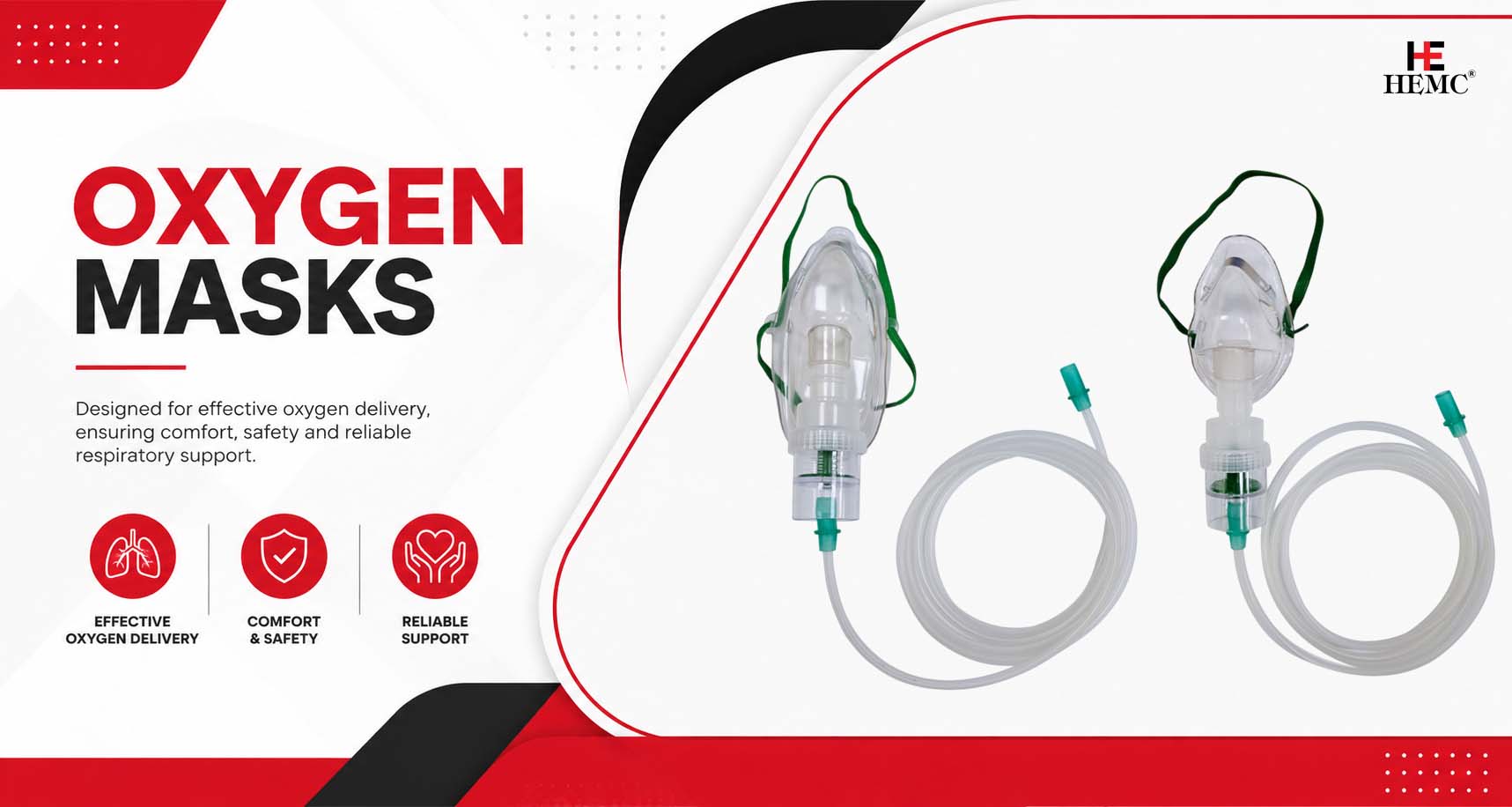
An oxygen mask is a medical device designed to deliver supplemental oxygen from a source (like an oxygen tank or concentrator) to a patient’s nose and mouth. It ensures that the patient receives a higher concentration of oxygen than is available in ambient air, which is critical for those who are unable to breathe adequately or suffer from conditions that impair oxygen intake.
Oxygen masks are commonly used in hospitals, ambulances, home care, and emergency situations. They are made from medical-grade plastic or silicone and are available in adult, pediatric, and infant sizes.
Key Features of an Oxygen Mask
The design of an oxygen mask focuses on safety, comfort, and effective oxygen delivery. Some of the key features include:
Transparent Material
Most oxygen masks are made of clear, flexible PVC or silicone, allowing healthcare providers to monitor the patient’s facial expressions, skin color, and possible vomit or obstruction.
Adjustable Elastic Straps
Masks come with adjustable straps to secure the device comfortably over the patient’s head and face, ensuring a snug fit and minimizing air leakage.
Oxygen Tubing
A soft, flexible oxygen tube connects the mask to an oxygen source. The tubing is designed to be long enough to provide mobility to the patient.
Exhalation Ports
These side vents or holes allow exhaled carbon dioxide to escape, preventing re-breathing and buildup of CO₂ within the mask.
Reservoir Bag (for certain types)
Some masks (like non-rebreather masks) include a reservoir bag to store oxygen, providing a higher concentration of oxygen to the patient.
Nasal Bridge Clip
Many oxygen masks include a malleable metal strip or nose clip to conform to the nose shape and reduce leakage.
Latex-Free
Most modern masks are latex-free to prevent allergic reactions in sensitive patients.
Types of Oxygen Masks
Oxygen masks come in several types based on the oxygen concentration they deliver and the patient’s condition. The main types include:
Simple Face Mask
- Delivers: 40–60% oxygen.
- Flow rate: 5–10 L/min.
- Use: Short-term therapy for moderate oxygen needs.
- Pros: Easy to use, inexpensive.
- Cons: Not suitable for CO₂ retention patients.
Non-Rebreather Mask (NRB)
- Delivers: Up to 90–100% oxygen.
- Flow rate: 10–15 L/min.
- Use: For critically ill patients needing high oxygen.
- Features: One-way valves and a reservoir bag prevent rebreathing.
- Pros: Delivers high FiO₂; ideal for emergencies.
- Cons: Not for long-term use; may cause discomfort.
Partial Rebreather Mask
- Delivers: 60–90% oxygen.
- Flow rate: 6–10 L/min.
- Features: Reservoir bag without one-way valves.
- Use: Intermediate step between simple mask and NRB.
Venturi Mask
- Delivers: Precise oxygen concentrations (24–50%).
- Use: COPD patients or those requiring exact oxygen levels.
- Features: Color-coded adaptors regulate oxygen flow.
- Pros: Controlled FiO₂ prevents CO₂ retention risks.
Nasal Cannula (alternative interface)
- Not a mask, but often compared.
- Delivers: 24–40% oxygen.
- Use: For patients needing low-flow oxygen.
- Pros: Comfortable for long-term use; allows eating/speaking.
High-Flow Oxygen Masks
- Specialized masks used with high-flow oxygen systems.
- Delivers: Heated, humidified oxygen up to 100% at high flow rates.
- Use: Severe respiratory distress or ARDS.
Aerosol (Nebulizer) Mask
- Use: Delivers medications via mist and oxygen simultaneously.
- Feature: Connected to a nebulizer chamber.
- Common in asthma or COPD exacerbation treatment.
Benefits of Oxygen Masks
Oxygen masks provide numerous clinical and practical benefits, especially for patients with respiratory compromise. Some of the key benefits include:
Improved Oxygenation
Oxygen masks ensure efficient delivery of oxygen to the lungs, increasing oxygen saturation in the blood and improving overall tissue perfusion.
Emergency Use
In emergencies (e.g., trauma, cardiac arrest, poisoning), oxygen masks are critical in stabilizing patients, preventing organ failure from hypoxia.
Support in Respiratory Diseases
They are vital in managing conditions such as:
- COPD
- Pneumonia
- Asthma
- COVID-19
- Pulmonary edema
- ARDS (Acute Respiratory Distress Syndrome)
Versatility and Availability
Available in multiple sizes and styles, oxygen masks can be used across different age groups and clinical settings—from ambulances to intensive care units.
Controlled Delivery
Masks like the Venturi mask allow accurate titration of oxygen, preventing hypercapnia in patients with chronic lung disease.
Non-invasive Support
They offer a non-invasive method of respiratory support, which is preferred over invasive mechanical ventilation when appropriate.
Cost-Effective
Oxygen masks are generally affordable and disposable, reducing infection risks and hospital costs.
Role of Oxygen Masks in Healthcare
The use of oxygen masks plays a fundamental role in modern healthcare systems across various levels of care, including:
Emergency and Trauma Care
Oxygen masks are among the first-line interventions in trauma and emergency response. They help maintain oxygenation during resuscitation, shock, or cardiac arrest.
Post-Surgical Recovery
During postoperative care, oxygen masks aid in supporting breathing after anesthesia, which can depress respiratory drive.
Respiratory Care and Pulmonology
In hospitals and clinics, oxygen masks are a core tool in managing acute and chronic respiratory illnesses, especially during exacerbations.
Intensive Care Units (ICUs)
Oxygen masks, particularly non-rebreather and Venturi types, are crucial in the management of critically ill patients with low oxygen levels or respiratory failure.
Ambulance and Pre-Hospital Settings
EMTs and paramedics use oxygen masks during transport to stabilize patients before reaching the hospital.
Home Healthcare
Patients with chronic lung diseases or long-term oxygen therapy may use home oxygen masks, improving quality of life and reducing hospital admissions.
Palliative and End-of-Life Care
Oxygen therapy through masks is also used to ease breathlessness in terminally ill patients, improving comfort and dignity.
Pediatric and Neonatal Care
Specially designed masks help deliver precise oxygen levels to newborns and children with respiratory distress, prematurity, or congenital issues.
Conclusion
In summary, an oxygen mask is a vital medical device used to deliver oxygen therapy across a wide range of clinical situations. Its key features, such as clear materials, adjustable straps, and specialized designs (e.g., non-rebreather, Venturi), allow healthcare providers to meet the individual oxygenation needs of different patients.
With various types suited for specific use cases—from emergency care to long-term home therapy—oxygen masks play an essential role in saving lives, improving patient outcomes, and enhancing comfort. Their non-invasive nature, affordability, and wide applicability make them an indispensable tool in healthcare systems worldwide.