
 +91 83682 81897
A Laryngeal Mask Airway (LMA) is a supraglottic airway device used to keep a patient’s airway open during anesthesia, resuscitation, or emergency situations. Positioned above the vocal cords (larynx), it allows for effective ventilation without the need for more invasive procedures such as endotracheal intubation. Since its introduction in the 1980s, the LMA has become an essential tool in airway management across various medical settings.
Definition and Design
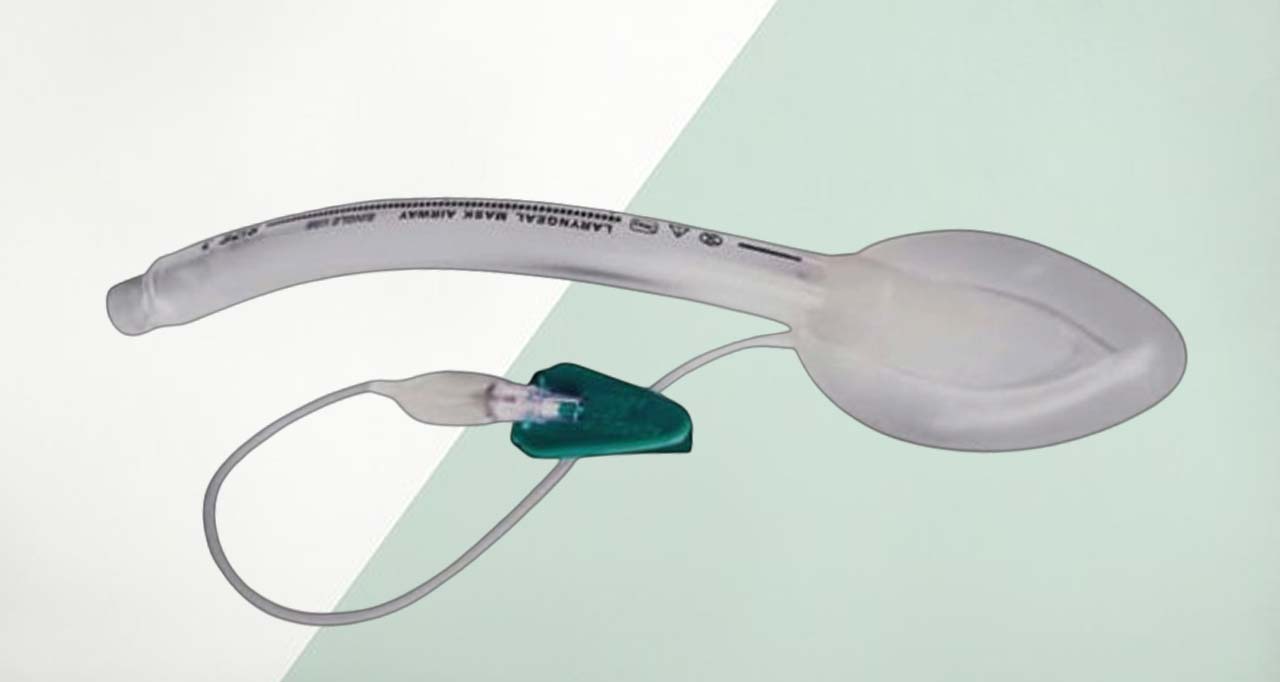
The laryngeal mask airway is a medical device that sits in the pharynx and forms a seal around the laryngeal inlet, allowing air to pass freely into the lungs. It is often made of medical-grade silicone or PVC and consists of:
- Airway tube – A flexible tube that connects to a breathing circuit or manual resuscitator.
- Mask or cuff – A soft, inflatable component that is inserted into the hypopharynx and inflates to seal around the laryngeal inlet.
- Inflation line and pilot balloon – Allows inflation and deflation of the cuff to create an adequate seal.
The LMA bridges the gap between a face mask and an endotracheal tube in terms of invasiveness and ease of use.
Key Features
- Supraglottic Placement: Rests above the glottis, reducing trauma to vocal cords and trachea.
- Reusable or Disposable: Available in both single-use and multiple-use versions.
- Size Variety: Multiple sizes available for neonates, children, and adults.
- Minimal Insertion Force: Designed for blind insertion with minimal head manipulation.
- Airway Seal: Cuff provides an effective seal, facilitating positive pressure ventilation.
- Compatible with Breathing Circuits: Standard 15mm connector attaches to anesthesia or ventilator machines.
Types of Laryngeal Mask Airways
Over the years, various modifications have led to several types of LMAs:
- Classic LMA (cLMA): The original design, suitable for general anesthesia in spontaneously breathing patients.
- ProSeal LMA (PLMA): Features an extra channel for gastric access and better airway sealing pressure.
- Supreme LMA: A disposable version with a built-in drain tube and a more rigid airway tube for easy insertion.
- Flexible LMA: Has a reinforced tube that can be bent without kinking; useful in head and neck surgeries.
- i-gel®: A non-inflatable, anatomically shaped version made from a gel-like material that provides a good seal.
- Fastrach LMA: Specifically designed to facilitate blind endotracheal intubation through the LMA.
Indications for Use
Laryngeal mask airways are used in various clinical settings, including:
- Elective surgical procedures under general anesthesia where intubation is not necessary.
- Difficult airway management when intubation is unsuccessful or not possible.
- Pre-hospital emergency care, especially by paramedics and emergency responders.
- Resuscitation during cardiac arrest as a rescue airway.
- Day-care or ambulatory surgeries, minimizing recovery time.
- Bronchoscopy or diagnostic airway procedures where partial airway access is needed.
Contraindications
- Despite its versatility, the LMA is not suitable for every situation. Contraindications include:
- High risk of aspiration (e.g., full stomach, gastrointestinal reflux).
- Morbid obesity or pregnancy where reduced gastric emptying increases aspiration risk.
- Airway obstruction below the glottis.
- Poor pulmonary compliance needing high airway pressure ventilation.
- Patients requiring prolonged ventilation (greater than 2 hours under anesthesia).
Insertion Technique
Preparation:
- Choose the appropriate size.
- Check cuff integrity.
- Lubricate the posterior surface.
Patient Positioning:
- Place the patient in the “sniffing” position (head extended, neck flexed).
Insertion:
- Hold the device like a pen and slide it along the hard palate and posterior pharyngeal wall.
- Advance until resistance is felt.
Cuff Inflation:
- Inflate the cuff with the recommended volume of air to create an effective seal.
Confirmation:
- Check for chest rise, auscultate breath sounds, and monitor capnography.
Securing:
- Tape or tie the device in place to prevent dislodgment.
Benefits of Laryngeal Mask Airway
- Ease of Use: Minimal training required compared to endotracheal intubation.
- Non-invasive: Reduces the risk of trauma to the trachea and vocal cords.
- Rapid Insertion: Quick airway access during emergencies.
- Lower Anesthetic Requirements: Less need for deep anesthesia or muscle relaxants.
- Improved Patient Recovery: Reduced incidence of sore throat, coughing, and hoarseness.
- Effective Ventilation: Suitable for spontaneous or assisted ventilation.
- Useful in Difficult Airway Scenarios: Especially in failed intubation algorithms.
Complications and Risks
- Though generally safe, LMAs may present complications such as:
- Aspiration of gastric contents, especially in improperly fasted patients.
- Malpositioning, leading to ineffective ventilation or hypoxia.
- Airway trauma, including sore throat, bleeding, or vocal cord injury.
- Laryngospasm or bronchospasm, particularly during insertion or removal.
- Cuff overinflation causing pharyngeal nerve damage or pressure necrosis.
- Dislodgement during surgery, especially if not secured well.
Role in Pre-Hospital and Emergency Care
Emergency responders and paramedics frequently use LMAs due to:
- Speed of deployment.
- Simplicity, especially in environments without intubation tools.
- Efficiency in delivering oxygen during cardiac arrest or respiratory failure.
- Compatibility with portable ventilators or bag-valve masks.
Conclusion
The laryngeal mask airway represents a revolutionary advancement in airway management, combining the ease of use with reliable performance. Whether used in routine surgeries, emergency scenarios, or difficult airway situations, the LMA provides a safe, efficient, and less invasive alternative to traditional intubation methods. Continuous innovations and expanding applications ensure that LMAs will remain integral to modern anesthesia and emergency medicine practices for years to come.