
 +91 83682 81897
Infant care is one of the most critical aspects of healthcare, requiring specialized equipment, advanced technology, and safe environments to ensure the well-being of newborns and young children. From maternity wards to neonatal intensive care units (NICUs), modern hospitals depend on high-quality infant baby and baby care equipment to deliver effective medical care and support healthy development.
The healthcare industry continues to evolve with innovations in hospital furniture, medical devices, and patient care solutions specifically designed for infants. Essential products such as infant warmers, baby cribs, incubators, examination tables, and Hospital beds tables & trolley contribute significantly to improving patient outcomes and enhancing healthcare efficiency.
Understanding Infant Baby Care Equipment
Infant baby care equipment refers to specialized medical devices and support products designed to provide care, monitoring, treatment, and comfort to newborns and infants. These products are commonly used in hospitals, maternity centers, pediatric clinics, and neonatal intensive care units.
Unlike standard medical equipment, infant care solutions are developed with extra attention to safety, hygiene, temperature control, and ergonomic design. Every piece of equipment plays a vital role in supporting the unique physiological needs of babies during their earliest stages of life.
Modern healthcare facilities invest heavily in premium-quality infant care products as part of their overall hospital furniture infrastructure to ensure exceptional standards of neonatal care.
Importance of Infant Care Equipment in Healthcare Facilities
Ensuring Infant Safety
- The primary objective of baby care equipment is to maintain a safe environment for newborns. Features such as protective side rails, temperature regulation systems, and secure monitoring devices reduce risks and provide continuous protection.
Supporting Medical Professionals
- Doctors, nurses, and pediatric specialists rely on specialized tools to deliver efficient healthcare services. Equipment such as infant examination tables, baby trolleys, and neonatal monitors streamline workflows and improve clinical accuracy.
Enhancing Parent Confidence
- Modern baby care facilities equipped with advanced medical systems reassure parents about their child’s health and well-being. Comfortable surroundings and high-quality Hospital beds tables & trolley arrangements further contribute to a positive patient experience.
Improving Infection Control
- Maintaining hygiene is essential in neonatal environments. Stainless steel furniture, easy-to-clean surfaces, and antimicrobial materials help healthcare institutions minimize infection risks and maintain strict sanitary standards.
Essential Types of Infant Baby Care Equipment
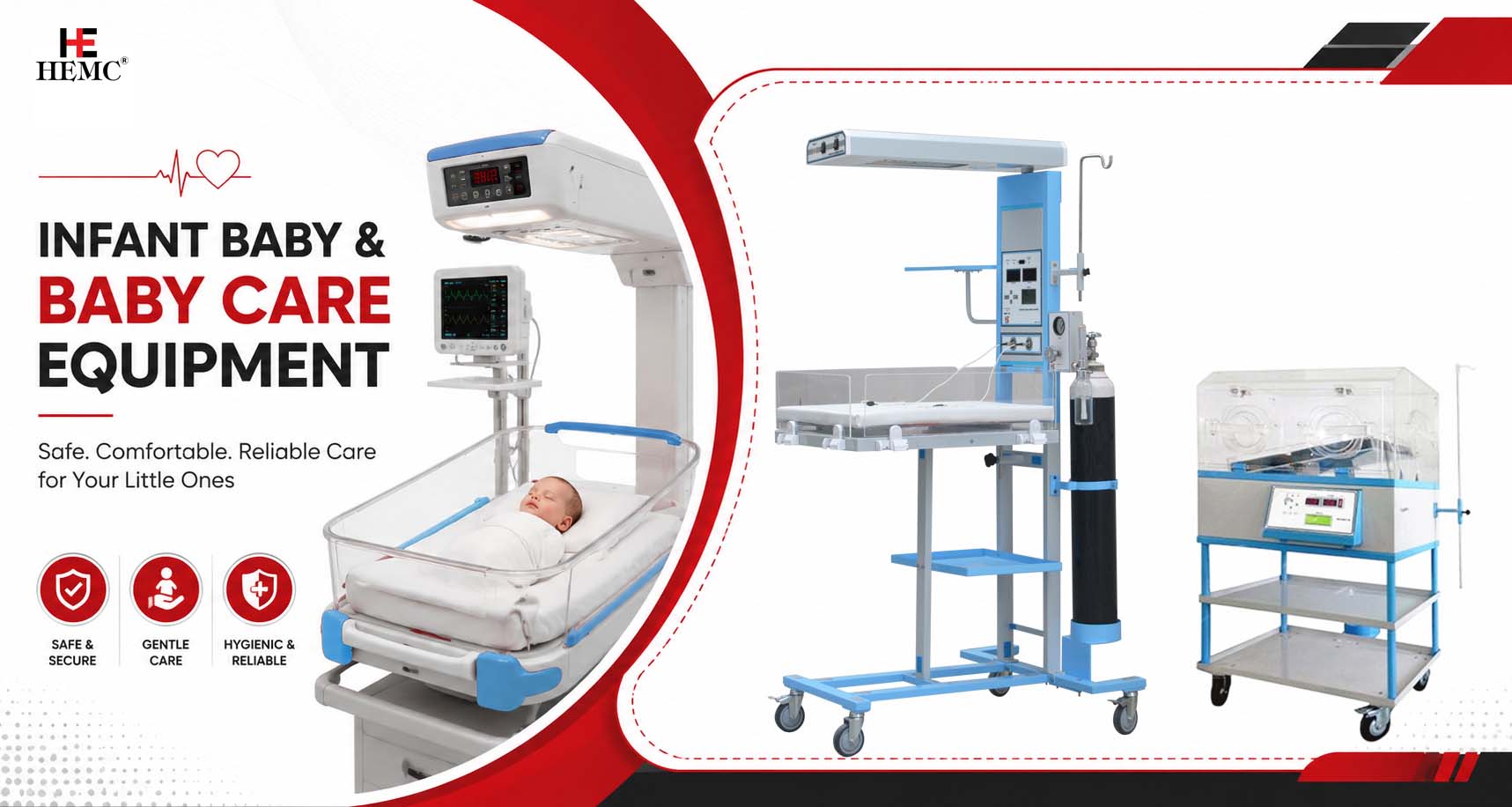
Infant Incubators
- Infant incubators are among the most important devices used in neonatal care. They provide controlled environments that maintain appropriate temperature, humidity, and oxygen levels for premature or critically ill babies.
- Modern incubators feature advanced monitoring systems, alarms, and accessibility options that enable healthcare professionals to provide effective treatment without compromising infant safety.
Infant Radiant Warmers
- Radiant warmers help maintain the body temperature of newborns immediately after birth or during medical procedures. These systems provide open access to healthcare providers while ensuring thermal stability for infants.
- Many hospitals consider radiant warmers an essential part of their neonatal equipment and hospital furniture collections.
Baby Cribs and Bassinets
- Hospital-grade baby cribs are specifically designed to offer safety, mobility, and convenience. Features include transparent side panels, adjustable heights, and durable wheels for easy transportation.
- Modern bassinets allow mothers and healthcare staff to monitor newborns comfortably while ensuring compliance with hospital safety standards.
Infant Examination Tables
- Pediatric examination tables provide secure and comfortable spaces for infant checkups, vaccinations, and routine medical assessments. Ergonomic designs help medical practitioners perform procedures efficiently while minimizing infant discomfort.
- These specialized tables complement broader categories of Hospital beds tables & trolley solutions within healthcare environments.
Baby Weighing Scales
- Accurate weight measurement is fundamental in monitoring infant growth and development. Digital baby scales offer precision, easy readability, and hygienic surfaces suitable for hospital applications.
- Regular weight assessments enable healthcare providers to detect potential health concerns and adjust treatment plans accordingly.
Role of Hospital Furniture in Infant Care Units
Quality hospital furniture plays a significant role in improving healthcare delivery for newborns and their families. Beyond medical devices, supportive infrastructure contributes to patient comfort, staff efficiency, and infection prevention.
Specialized Hospital Beds
- Maternity and pediatric departments require specialized beds that accommodate mothers and infants simultaneously. Adjustable features, safety mechanisms, and ergonomic designs enhance comfort and facilitate medical procedures.
Hospital Beds Tables & Trolley Systems
- Efficient Hospital beds tables & trolley solutions are indispensable in neonatal and maternity care units. These products support daily hospital operations by enabling smooth transportation of medical supplies, infant essentials, medications, and equipment.
- Bedside tables provide convenient storage for parents and healthcare workers, while medical trolleys help organize essential tools and emergency supplies. Stainless steel construction ensures durability, hygiene, and long-term performance.
Storage Cabinets and Utility Furniture
- Well-organized storage systems help maintain cleanliness and accessibility within infant care units. Cabinets designed for neonatal departments accommodate diapers, medical instruments, feeding equipment, and emergency supplies.
- Effective storage solutions are integral components of comprehensive hospital furniture systems.
Neonatal Intensive Care Unit (NICU) Equipment
- Neonatal Intensive Care Units require highly specialized equipment to support critically ill or premature infants. Essential NICU equipment includes:
Ventilators
- Neonatal ventilators assist infants experiencing respiratory difficulties. Advanced systems deliver precise airflow while minimizing lung damage.
Phototherapy Units
- Phototherapy devices treat neonatal jaundice using controlled light exposure. These units are safe, effective, and widely used in hospitals worldwide.
Infant Monitoring Systems
- Continuous monitoring equipment tracks vital signs such as heart rate, oxygen saturation, respiratory activity, and temperature. Early detection of abnormalities improves treatment outcomes and patient safety.
Transport Incubators
- Transport incubators allow safe movement of infants between departments or healthcare facilities without compromising environmental stability.
These advanced technologies work alongside high-quality Hospital beds tables & trolley systems and supportive hospital infrastructure to create comprehensive neonatal care environments.
Features to Consider When Selecting Baby Care Equipment
Healthcare institutions should evaluate several factors when investing in infant care products:
Safety Standards
- Equipment must comply with national and international medical safety regulations. Reliable manufacturers conduct extensive testing to ensure product quality and patient protection.
Hygiene and Cleanability
- Easy-to-clean materials reduce contamination risks and support infection control protocols. Stainless steel and antimicrobial surfaces are particularly beneficial in neonatal environments.
Ergonomic Design
- User-friendly designs improve operational efficiency and minimize physical strain on healthcare workers. Adjustable features and smooth mobility enhance overall functionality.
Durability
- Medical equipment experiences intensive daily use. Durable construction ensures long-term reliability and reduces maintenance costs.
Technological Integration
- Modern healthcare facilities increasingly prefer equipment with digital interfaces, automated monitoring capabilities, and data management systems to improve patient care.
Benefits of Modern Infant Baby Care Equipment
Better Clinical Outcomes
- Advanced medical technologies contribute to improved survival rates, faster recovery, and healthier development among newborns, particularly premature infants.
Enhanced Healthcare Efficiency
- Well-designed hospital furniture, including Hospital beds tables & trolley, enables healthcare professionals to perform their duties more effectively and respond quickly during emergencies.
Improved Family Experience
- Comfortable environments and organized facilities reduce parental stress and foster positive healthcare experiences during childbirth and neonatal care.
Cost Savings
- Durable, high-quality equipment reduces replacement expenses and maintenance requirements, offering long-term economic benefits for healthcare institutions.
Compliance with Healthcare Regulations
- Modern infant care products help hospitals meet regulatory standards and accreditation requirements related to patient safety and infection control.
Emerging Trends in Infant Care Equipment
- The healthcare industry continues to embrace innovation, leading to significant developments in infant care technology.
Smart Monitoring Solutions
- Wireless sensors and remote monitoring systems allow healthcare professionals to track infant health data continuously and respond promptly to medical concerns.
Eco-Friendly Manufacturing
- Manufacturers increasingly adopt sustainable materials and energy-efficient production methods to reduce environmental impacts.
Integrated Hospital Furniture Systems
- Modern hospital furniture designs emphasize multifunctionality and seamless integration with medical technologies. Combined Hospital beds tables & trolley solutions enhance operational efficiency and space utilization.
Digital Healthcare Connectivity
- Electronic medical records and connected devices enable better coordination among healthcare teams and improve patient management processes.
Importance of Quality Manufacturing
- Choosing reputable manufacturers is essential for ensuring product reliability, safety, and compliance with international standards. Leading healthcare equipment companies invest in research, quality control, and technological innovation to deliver superior products.
Healthcare providers should prioritize manufacturers offering:
- Certified quality management systems
- International safety compliance
- Durable materials and construction
- After-sales support and maintenance services
- Customization options for specialized healthcare needs
Reliable partnerships contribute to better patient outcomes and long-term operational success.
Future of Infant Baby Care Equipment
The future of infant healthcare is expected to focus on intelligent technologies, personalized treatment approaches, and enhanced patient comfort. Artificial intelligence, predictive analytics, and automation will likely play larger roles in neonatal monitoring and treatment.
At the same time, traditional elements such as durable hospital furniture, efficient Hospital beds, tables & trolley, and ergonomic patient environments will remain fundamental components of quality healthcare infrastructure.
Healthcare facilities that embrace both technological innovation and practical design solutions will be better positioned to deliver exceptional infant care services in the years ahead.
Conclusion
Infant baby and baby care equipment are indispensable elements of modern healthcare systems. From incubators and radiant warmers to examination tables and advanced monitoring devices, these products support the health, safety, and development of newborns and infants.
Equally important are high-quality hospital furniture solutions, including specialized Hospital beds, tables and trolley that improve efficiency, organization, and patient comfort within maternity and neonatal departments.
As medical technology continues to advance, healthcare providers must invest in reliable, durable, and innovative infant care equipment to meet evolving patient needs and maintain the highest standards of clinical excellence. By combining modern medical devices with thoughtfully designed hospital infrastructure, healthcare institutions can create safer, more effective environments for the youngest and most vulnerable patients.