
 +91 83682 81897
Suction machines are among the most essential medical devices used in hospitals, clinics, ambulances, emergency care units, and even home healthcare settings. Designed to remove fluids, mucus, blood, saliva, and other secretions from a patient’s airway or surgical site, these devices play a critical role in maintaining clear airways and improving patient safety.
Whether during surgery, emergency resuscitation, intensive care, or post-operative recovery, suction machines help healthcare professionals provide efficient and uninterrupted patient care. They are often used alongside other essential medical equipment such as oxygen masks, ventilators, patient monitors, and emergency resuscitation devices.
Modern healthcare facilities rely not only on advanced medical devices but also on high-quality hospital furniture like hospital beds, overbed tables, bedside lockers, examination tables, and trolleys to create an efficient and patient-friendly environment. Together, these products contribute to improved treatment outcomes and enhanced patient comfort.
This comprehensive guide explores everything you need to know about suction machines, including their working principle, types, features, applications, benefits, maintenance, and factors to consider before purchasing.
What is a Suction Machine?
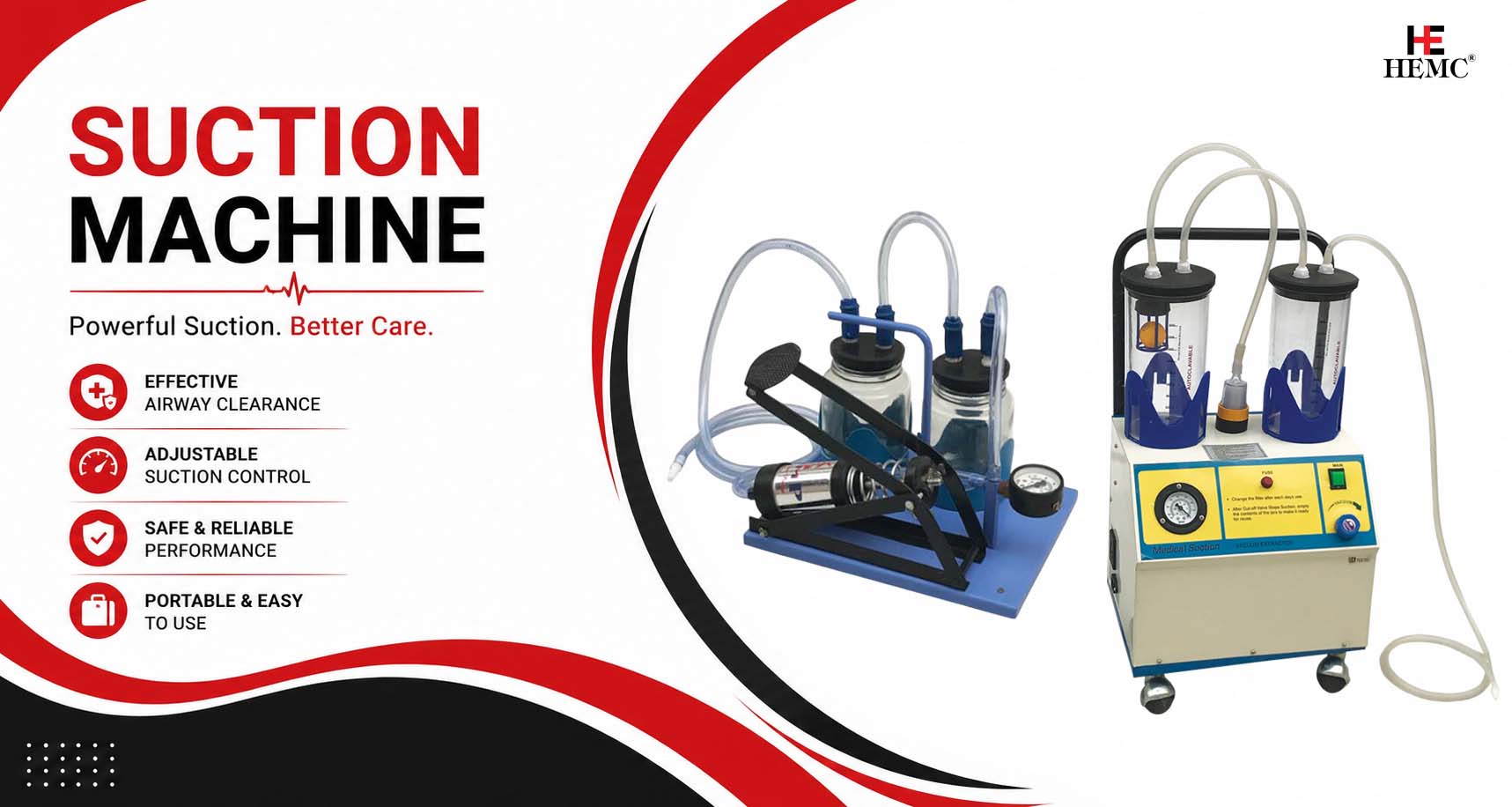
A suction machine is a portable or stationary medical device that creates negative pressure (vacuum) to remove unwanted fluids and secretions from a patient’s airway, wounds, or surgical site.
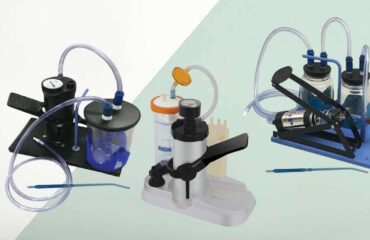
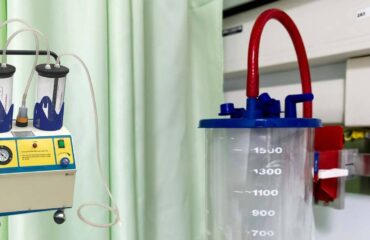
It consists of a vacuum pump, collection jar, suction tubing, bacterial filter, and suction catheter. These components work together to safely collect fluids without contaminating the surrounding environment.
Suction machines are indispensable in emergency medicine, operating rooms, intensive care units (ICUs), ambulances, dental clinics, and home care settings.
Why are Suction Machines Important?
Maintaining a clear airway is essential for proper breathing. Patients suffering from respiratory disorders, trauma, surgery, neurological conditions, or unconsciousness often cannot clear their own airways.
A suction machine helps by removing:
- Blood
- Saliva
- Vomit
- Mucus
- Respiratory secretions
- Surgical fluids
- Pus from wounds
This ensures unobstructed airflow and significantly reduces the risk of aspiration and respiratory complications.
How Does a Suction Machine Work?
The working principle is relatively simple.
- The vacuum pump generates negative pressure, creating suction inside the tubing. When a suction catheter is inserted into the patient’s airway or surgical site, fluids are drawn into the collection jar while filters prevent contamination of the pump.
- The collected waste remains safely stored until disposal according to hospital infection control protocols.
- Most advanced machines allow healthcare professionals to adjust suction pressure depending on patient age and clinical requirements.
Main Components of a Suction Machine
A standard suction machine includes several essential components:
Vacuum Pump
- Generates the suction force required to remove fluids.
Collection Jar
- Stores blood, mucus, saliva, and other bodily fluids.
Suction Tubing
- Transfers fluids from the patient to the collection jar.
Suction Catheter
- Inserted into the airway or wound for fluid removal.
Bacterial Filter
- Prevents microorganisms from entering the pump.
Pressure Regulator
- Allows precise adjustment of suction intensity.
Vacuum Gauge
- Displays the suction pressure for safe operation.
Types of Suction Machines
Healthcare facilities use different types depending on their clinical requirements.
Portable Suction Machines
Portable units are lightweight, compact, and battery-operated.
They are ideal for:
- Ambulances
- Emergency response
- Home healthcare
- Field hospitals
- Disaster management
Their mobility makes them extremely useful during patient transportation.
Electric Suction Machines
Electric suction machines are commonly used in hospitals and clinics.
Advantages include:
- Continuous operation
- Higher suction power
- Larger collection capacity
- Reliable performance
- Minimal maintenance
These units are frequently found near ICU hospital beds and operating theatres.
Manual Suction Machines
Manual suction devices require hand or foot operation.
They are particularly useful in:
- Remote healthcare
- Military operations
- Disaster relief
- Areas without electricity
Wall-Mounted Suction Systems
Many hospitals install centralized vacuum systems connected directly to patient care units.
These systems offer:
- Continuous suction
- Space-saving design
- High efficiency
- Reduced equipment movement
They are widely used in emergency departments and ICUs.
Key Features of Modern Suction Machines
Today’s suction machines incorporate advanced technology for improved safety and performance.
Important features include:
- Adjustable vacuum pressure
- Oil-free vacuum pump
- Low noise operation
- Overflow protection
- Antibacterial filters
- Portable design
- Battery backup
- Durable collection jars
- Easy cleaning
- User-friendly controls
- Automatic shut-off systems
- Compact construction
These features ensure reliable operation across various healthcare environments.
Applications of Suction Machines
Suction machines have a broad range of clinical applications.
Emergency Medicine
- During emergencies, airway clearance becomes a top priority.
- Suction machines remove secretions before oxygen therapy using an oxygen mask or mechanical ventilation begins.
Intensive Care Units (ICUs)
- ICU patients often require frequent suctioning due to mechanical ventilation or respiratory illnesses.
- The suction machine helps maintain airway patency and reduces infection risks.
Surgical Procedures
- Operating rooms depend heavily on suction machines to remove blood and surgical fluids, providing surgeons with a clear operating field.
Dental Clinics
- Dentists use compact suction systems to remove saliva and water during procedures.
Ambulances
- Emergency medical teams use portable suction machines for trauma care, cardiac arrest, respiratory emergencies, and accident victims.
Home Healthcare
- Patients with chronic respiratory disorders or tracheostomies often require portable suction machines for daily airway management.
Neonatal Care
- Special low-pressure suction devices safely clear newborn airways immediately after delivery.
Benefits of Suction Machines
The widespread use of suction machines offers numerous advantages.
Improved Airway Management
- Removing secretions helps patients breathe more comfortably.
Faster Emergency Response
- Quick airway clearance saves valuable time during critical situations.
Better Surgical Visibility
- Surgeons can perform procedures with greater precision.
Reduced Risk of Infection
- Removing contaminated fluids lowers infection risks.
Enhanced Patient Comfort
- Patients experience less discomfort and breathing difficulty.
Portable Convenience
- Battery-powered units allow uninterrupted care during transportation.
Versatile Applications
- Suitable for hospitals, clinics, ambulances, nursing homes, and home care.
Reliable Performance
- Modern oil-free pumps provide consistent suction for extended periods.
Suction Machines and Other Essential Medical Equipment
A suction machine rarely works alone. It is usually part of a comprehensive patient care setup.
Commonly used alongside:
- Oxygen masks
- Patient monitors
- Nebulizers
- Ventilators
- Infusion pumps
- Defibrillators
- ECG machines
- Pulse oximeters
- Medical trolleys
Together, these medical devices support effective diagnosis, treatment, and emergency care.
Role of Hospital Furniture in Patient Care
Advanced equipment performs best when supported by functional hospital furniture.
Healthcare facilities require furniture that improves workflow and patient safety.
Common examples include:
Hospital Beds
- Modern hospital beds provide adjustable positioning, improving respiratory care and making suction procedures easier.
Overbed Tables
- Allow convenient placement of medications and medical equipment.
Bedside Lockers
- Store patient belongings and essential supplies.
Instrument Trolleys
- Help transport suction accessories and other medical equipment.
Examination Tables
- Support patient assessment and treatment.
Stretchers
- Facilitate patient movement during emergencies.
- Combining quality hospital furniture with advanced medical devices enhances clinical efficiency and patient satisfaction.
Factors to Consider Before Buying a Suction Machine
Selecting the right suction machine depends on clinical needs.
Important considerations include:
Suction Capacity
- Ensure adequate vacuum pressure for intended applications.
Portability
- Portable models are ideal for ambulances and home care.
Power Source
- Choose between electric, battery-operated, or manual systems.
Noise Level
- Quiet operation improves patient comfort.
Collection Jar Size
- Larger jars reduce the need for frequent emptying.
Safety Features
- Look for overflow protection, bacterial filters, and automatic shut-off.
Ease of Cleaning
- Simple maintenance helps prevent infections.
Build Quality
- Durable construction ensures long service life.
Regulatory Compliance
- Purchase machines that comply with recognized medical quality standards.
Maintenance Tips for Suction Machine
Routine maintenance ensures reliable performance and extends equipment life.
Best practices include:
- Clean collection jars after every use.
- Replace bacterial filters regularly.
- Inspect tubing for cracks or leaks.
- Check suction pressure periodically.
- Charge batteries properly.
- Sterilize reusable accessories.
- Follow manufacturer maintenance guidelines.
- Schedule preventive servicing.
Proper maintenance minimizes downtime and improves patient safety.
Future Trends in Suction Machine Technology
Healthcare technology continues to evolve rapidly.
Emerging innovations include:
- Smart digital vacuum control
- Touchscreen interfaces
- Wireless monitoring
- Lightweight portable designs
- Longer battery life
- AI-assisted performance monitoring
- Improved infection control systems
- Eco-friendly manufacturing materials
These advancements will further enhance efficiency, safety, and ease of use in healthcare settings.
Conclusion
Suction machines are indispensable medical devices that support airway management, emergency care, surgery, intensive care, and home healthcare. Their ability to quickly remove blood, mucus, saliva, and other fluids helps healthcare professionals provide faster, safer, and more effective treatment.
When integrated with essential equipment such as oxygen masks, ventilators, and patient monitoring systems, suction machines become a vital component of comprehensive patient care. Likewise, high-quality hospital furniture, including ergonomic hospital beds, examination tables, instrument trolleys, and bedside storage solutions, creates a well-organized healthcare environment that improves both clinical efficiency and patient comfort.
As medical technology continues to advance, suction machines are becoming more portable, intelligent, and user-friendly. Choosing the right model, maintaining it properly, and integrating it with reliable medical equipment and hospital furniture ensures healthcare providers can deliver the highest standards of care while enhancing patient safety and treatment outcomes.