
 +91 83682 81897
A hospital medicine trolley, also known as a medication trolley, is a mobile cart specifically designed for the safe, organized, and efficient storage and distribution of medications within healthcare settings like hospitals, clinics, and nursing homes.
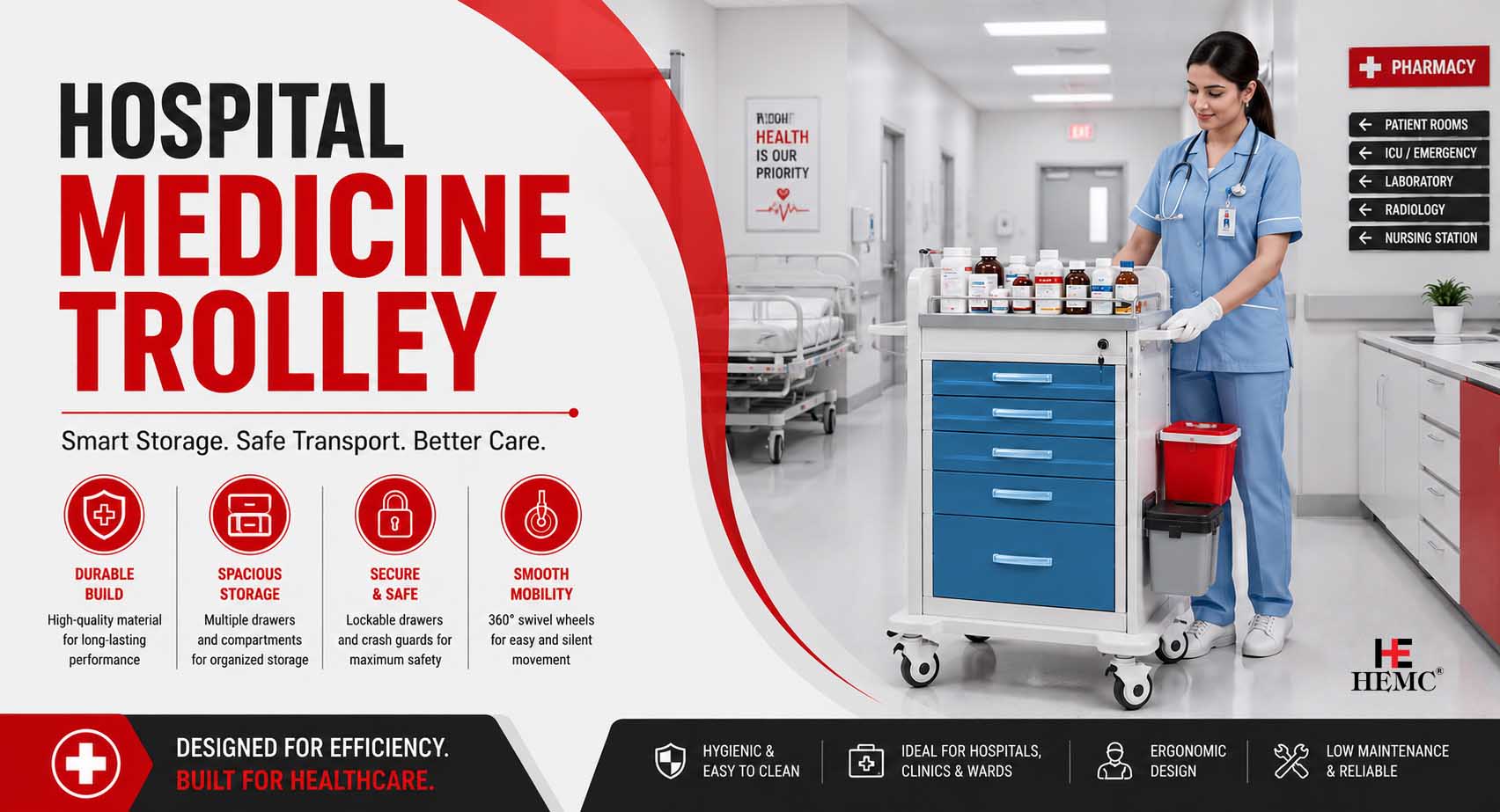
Key Characteristics of a Hospital Medicine Trolley:
Here are the key characteristics of a hospital medicine trolley explained in detail.
Mobility (Wheeled Base)
- Most trolleys are fitted with swivel castor wheels, usually four, which allow for smooth and silent movement.
- Lockable wheels ensure stability when parked beside a patient bed or workstation.
- Some wheels have antistatic or shock-absorbing properties to prevent spills and damage.
Multiple Drawers & Compartments
- Typically designed with 3 to 8 drawers, depending on the model and intended use.
- Drawers may come in different colors or sizes to separate types of medication or patient-specific doses.
- Some drawers are removable trays, which help with restocking and cleaning.
- Compartments often include divider inserts for better organization.
Secure Locking Mechanism
- Manual locks (key-based) or digital/electronic locks are integrated for security.
- Prevents unauthorized access and ensures compliance with medication safety protocols.
- Useful in wards with controlled substances or restricted medication.
Durable and Hygienic Construction
- Made from stainless steel, aluminum, or high-grade ABS plastic, all of which are:
- Rust-resistant
- Easy to disinfect
- Lightweight yet strong
- Surfaces are often anti-microbial to help reduce infection risks.
Work Surface or Writing Platform
- A flat top surface is provided for preparing medications, mixing solutions, or reviewing patient files.
- Some models have pull-out side trays or writing boards for additional space.
- Integrated clipboard or document holders may be included for prescriptions and charts.
Accessories and Add-ons
- Waste bins (for general or biohazard waste)
- Sharps containers for safe disposal of needles
- Glove holders, IV pole hooks, and side baskets for tools or charts
- Some high-end models include barcode scanners, medication administration record (MAR) holders, and computer mounting arms
Ergonomic and User-Friendly Design
- Height-adjustable models may be available for staff comfort.
- Smooth edges and rounded corners prevent injuries.
- Drawer handles are designed for easy grip and frequent use.
Customizable Layout
- Trolleys can be tailored based on department needs—ICU, emergency, pediatrics, or general ward.
- Optional configurations include color-coded drawers, labeling systems, and removable cassettes for modular use.
Common Uses of a Hospital Medicine Trolley
Here are the common uses of a hospital medicine trolley, explained in detail:
Medication Distribution During Rounds
- Primary use is to carry and distribute medications during routine nurse or doctor rounds.
- Each drawer can be organized per patient or per schedule (e.g., morning, afternoon, evening doses).
- Reduces time spent fetching medication from central pharmacies or cabinets.
Organized Storage of Medications
- Keeps oral drugs, injections, ointments, and IV solutions neatly categorized and readily available.
- Separate compartments help reduce the risk of administering the wrong drug or dose.
- Supports compliance with hospital medication protocols and safety standards.
Transporting Emergency Medications
- In emergency wards or critical care units, the trolley may store fast-acting drugs like epinephrine, atropine, or nitroglycerin.
- Ensures rapid access during life-threatening situations or code blue events.
- Some trolleys are specially designated as crash carts with emergency medications and equipment.
Carrying Medical Supplies and Tools
Apart from medications, the trolley often carries:
- Syringes and needles
- IV cannulas and tubing
- Alcohol swabs, gloves, and disinfectants
- Blood pressure cuffs, thermometers, and stethoscopes
Useful for bedside administration or minor procedures.
Assisting in Documentation and Charting
- Trolleys often have writing boards or clipboards for recording medication administration.
- Nurses can update MARs (Medication Administration Records) on the go.
- Some advanced trolleys include space for a tablet or laptop for electronic documentation.
Medication Preparation and Mixing
The flat worktop surface allows nurses or pharmacists to prepare:
- IV drug mixtures
- Reconstituted antibiotic doses
- Dose splitting or pill crushing
Often equipped with clean trays or measuring equipment for accuracy.
Support in Isolation or Specialized Wards
- Used in ICU, COVID units, or isolation rooms to reduce cross-contamination risks.
- Individual trolleys may be dedicated per room or patient to limit sharing and infection spread.
Serving as a Temporary Mobile Pharmacy
- In smaller facilities or rural settings, the trolley may function as a mini pharmacy, especially during night shifts or emergencies when the main pharmacy is closed.
Training and Teaching in Medical Settings
- Used in medical schools or nursing colleges during practicals to teach drug administration techniques.
- Helps students practice organization, safety checks, and documentation.
Benefits of a Hospital Medicine Trolley
Here are the detailed benefits of a hospital medicine trolley in healthcare settings:
Improved Efficiency in Medication Administration
- Speeds up medication rounds by eliminating repeated trips to the pharmacy or supply room.
- Organized drawers and compartments allow healthcare staff to locate drugs quickly and accurately.
- Pre-filled trolleys save time during shift changes or emergencies.
Enhanced Patient Safety
Reduces medication errors by providing:
- Clearly labeled compartments
- Color-coded drawers
- Patient-specific medication storage
Secure locking mechanisms help prevent unauthorized access to controlled or high-risk drugs.
Better Organization of Medical Supplies
- Keeps syringes, IV supplies, gloves, and paperwork within arm’s reach.
- Prevents misplacement or contamination of essential items.
- Divided drawers and top trays help categorize medications by type, ward, or patient.
Mobility and Accessibility
- Easy to move across wards with smooth, lockable wheels.
- Brings critical medications and tools directly to the patient’s bedside.
- Enhances care in emergency situations where immediate response is needed.
Promotes Hygiene and Infection Control
- Constructed from stainless steel or antimicrobial plastic, which is easy to disinfect.
- Surfaces are designed to prevent spills and allow quick cleanup.
- Limits cross-contamination by minimizing the need to touch multiple storage locations.
Supports Documentation and Compliance
- Built-in writing boards, clipboards, or electronic mounts aid in real-time record-keeping.
- Encourages timely updates to MARs (Medication Administration Records).
- Supports compliance with hospital policies and regulatory standards.
Customizable and Versatile
Can be customized with:
- Additional trays or bins
- Sharps containers
- Waste baskets or glove dispensers
Suitable for various departments: general wards, ICUs, emergency units, pediatric or isolation wards.
Reduces Staff Workload and Fatigue
- Centralized storage and accessibility reduce physical strain and walking time.
- Organized layout helps staff stay focused and reduces mental fatigue during busy shifts.
Cost-Effective Long-Term Solution
- Durable materials ensure long service life, even with frequent use.
- Reduces loss of medication or supplies due to misplacement or disorganization.
- Prevents waste through better stock rotation and expiry tracking.
Types of a Hospital Medicine Trolley
Here are the types of hospital medicine trolleys, explained in detail based on design, functionality, and use:
Standard Medicine Trolley
- General-purpose model used in most hospital wards.
- Comes with multiple drawers for organized medication storage.
- Equipped with wheels, worktop surface, and optional accessories (like side bins or writing pads).
- Ideal for daily medication rounds and routine use.
Emergency Medicine Trolley (Crash Cart)
An emergency medicine trolley, also known as a crash cart or code cart, is a mobile unit in hospitals and other healthcare settings that stores and organizes essential medical supplies, equipment, and medications for rapid response to emergencies
- Specially designed for code blue situations and critical care.
- Stocked with emergency drugs like adrenaline, atropine, defibrillator pads, and IV supplies.
- Features:
- Bright red color (often)
- Sealed or lockable drawers
- Oxygen cylinder holder, defibrillator shelf
- Sharps container and waste bin
- Located in ICUs, emergency departments, and trauma units.
Pediatric Medicine Trolley
- Tailored for children’s hospitals or pediatric wards.
- Features:
- Smaller compartments for pediatric-sized doses.
- Often color-coded or labeled clearly to avoid confusion.
- Child-friendly designs and safety features.
- Helps reduce the risk of dosing errors in pediatric care.
- Helps reduce the risk of dosing errors in pediatric care.
Modular or Customizable Medicine Trolley
- Designed for maximum flexibility; comes with adjustable trays, bins, and shelves.
- Healthcare staff can reorganize layout based on specific department needs (e.g., oncology, surgery, etc.).
- Some include removable cassettes or trays to streamline restocking or cleaning.
Computerized or Smart Medicine Trolley
- Integrated with digital features such as:
- Barcode scanners
- Touchscreen monitors
- Electronic locking systems
- Battery backup for portable power
- Used in eMAR systems (Electronic Medication Administration Records) and digital charting.
- Promotes error-free administration through automated patient-drug matching.
Isolation or Infection Control Trolley
- Used in infectious disease wards (e.g., TB, COVID-19, MRSA).
- Made with antimicrobial surfaces and minimal seams for easy cleaning.
- Often dedicated per patient or room to prevent cross-contamination.
Anesthesia Medicine Trolley
- Specifically used in operating theatres to store anesthetic drugs and related supplies.
- Contains:
- Drawers for vials, syringes, airway tools
- Flat working area for prep
- Labels for fast identification during surgery
- Usually found in OTs, surgical prep rooms, or dental surgery suites.
Specialty Department Trolleys
Depending on the hospital department, these may include:
- Oncology Trolley: Equipped for chemotherapy and cancer-related medications.
- Dialysis Trolley: Stores nephrology-related medications, dialyzers, and tubing.
Geriatric Trolley: With larger labels, pill organizers, and aids for elderly care.