
 +91 83682 81897
The healthcare industry depends on precision, hygiene, and reliability to deliver quality patient care. Among the many medical supplies used in hospitals and healthcare institutions, Surgical Hollow-Ware plays a critical role in supporting surgical procedures, sterilization processes, and patient care. These stainless-steel instruments are indispensable in operating rooms, clinics, laboratories, and healthcare centers worldwide.
From kidney trays and dressing drums to instrument trays and bowls, surgical hollow-ware ensures that medical professionals can perform procedures safely and efficiently. Alongside Plastic Hollow-Ware, Laboratory Products, Hospital Beds, and Hospital Furniture, these products contribute to creating a fully equipped and functional healthcare environment.
This article explores the importance, types, applications, materials, benefits, and selection criteria for surgical hollow-ware while highlighting its role in modern medical facilities.
What is Surgical Hollow-Ware?
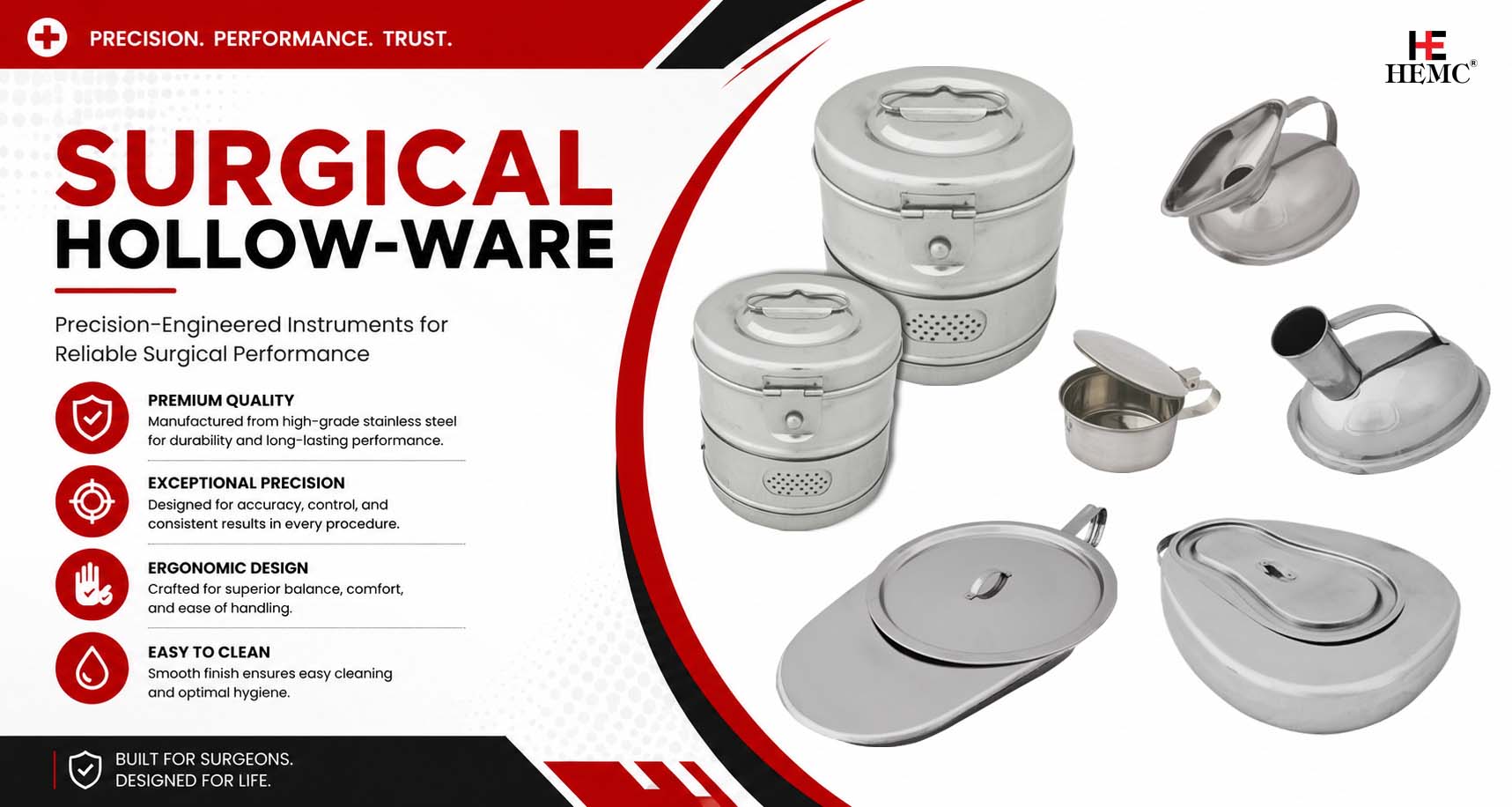
Surgical hollow-ware refers to a broad range of reusable stainless-steel medical containers and instruments designed to hold, transport, sterilize, and organize medical supplies during surgical and clinical procedures. Unlike cutting instruments, hollow-ware includes non-sharp equipment that assists surgeons, nurses, and healthcare professionals throughout patient treatment.
These products are manufactured from high-quality stainless steel, making them resistant to corrosion, rust, stains, and repeated sterilization. Their smooth surfaces ensure easy cleaning and help maintain strict infection control standards in hospitals.
Common Types of Surgical Hollow-Ware
Healthcare institutions utilize various types of surgical hollow-ware depending on medical specialties and operational requirements. Some of the most commonly used products include:
Kidney Trays
- Kidney trays are curved containers designed to collect dressings, medical waste, surgical instruments, or body fluids during medical procedures.
Dressing Drums
- Dressing drums safely store sterilized surgical dressings, cotton, and gauze while maintaining sterility until use.
Instrument Trays
- Instrument trays organize surgical tools before, during, and after operations, ensuring healthcare professionals have quick access to required instruments.
Gallipots
- Gallipots are small bowls used for holding antiseptics, medications, saline solutions, and surgical materials.
Bowls and Basins
- These containers assist in cleaning instruments, preparing solutions, and collecting fluids during surgeries.
Sterilization Containers
- Designed specifically for autoclaving, these containers protect surgical instruments throughout the sterilization cycle.
Materials Used in Surgical Hollow-Ware
The majority of surgical hollow-ware products are manufactured using premium-grade stainless steel, particularly SS 304 or SS 316. These materials offer several advantages:
- Excellent corrosion resistance
- Long operational lifespan
- High durability
- Resistance to repeated sterilization
- Smooth hygienic surface
- Easy maintenance
- Environmentally friendly through repeated reuse
High-quality manufacturing ensures that surgical hollow-ware meets international healthcare standards while providing exceptional reliability.
Importance of Surgical Hollow-Ware in Hospitals
Every hospital relies on surgical hollow-ware to support daily medical procedures. Its importance extends beyond operating rooms into emergency departments, outpatient clinics, intensive care units, laboratories, and diagnostic centers.
Infection Control
- Proper sterilization is one of the primary reasons surgical hollow-ware remains indispensable. Stainless-steel products withstand high-temperature autoclaving without losing structural integrity.
Operational Efficiency
- Organized instrument trays and containers reduce procedure time by allowing surgeons and nurses to access required tools quickly.
Patient Safety
- Clean, sterilized equipment minimizes the risk of hospital-acquired infections and contributes to safer patient outcomes.
Cost Effectiveness
- Reusable surgical hollow-ware significantly reduces long-term costs compared to disposable alternatives.
Applications Across Healthcare Facilities
Surgical hollow-ware finds application in various medical environments, including:
- Multi-specialty hospitals
- Government healthcare institutions
- Private clinics
- Nursing homes
- Medical colleges
- Diagnostic centers
- Veterinary hospitals
- Dental clinics
- Emergency care units
- Ambulatory surgical centers
Its versatility makes it an essential investment for healthcare providers of all sizes.
Plastic Hollow-Ware: A Complementary Medical Solution
In addition to stainless-steel products, Plastic Hollow-Ware has become increasingly popular in healthcare settings. Manufactured using medical-grade plastic, these lightweight products offer excellent chemical resistance while serving numerous clinical purposes.
Examples include:
- Plastic bowls
- Specimen containers
- Measuring jugs
- Urine containers
- Bedpans
- Wash basins
- Medicine cups
Plastic hollow-ware is widely used in outpatient departments, laboratories, emergency rooms, and patient wards due to its affordability and ease of handling.
Many healthcare facilities use both surgical stainless-steel hollow-ware and plastic hollow-ware depending on specific clinical requirements.
Role of Laboratory Products in Modern Healthcare
No hospital functions effectively without high-quality Laboratory Products. Clinical laboratories rely on specialized equipment to perform diagnostic testing, sample analysis, and medical research.
Essential laboratory products include:
- Test tube racks
- Beakers
- Measuring cylinders
- Centrifuge tubes
- Pipettes
- Specimen containers
- Glassware
- Plastic laboratory consumables
- Microscopes
- Laboratory storage equipment
Accurate laboratory testing supports disease diagnosis, treatment planning, and patient monitoring. Reliable laboratory products contribute directly to better healthcare outcomes.
Surgical Hollow-Ware and Hospital Beds
Although surgical hollow-ware is primarily associated with operating rooms, it also supports patient care around Hospital Beds. Nurses use kidney trays, bowls, and basins during bedside procedures, dressing changes, wound care, medication administration, and patient hygiene.
Modern hospital beds often integrate with bedside equipment, making surgical hollow-ware readily accessible during patient treatment.
Hospitals invest in adjustable hospital beds alongside quality surgical equipment to improve both patient comfort and caregiver efficiency.
Importance of Hospital Furniture
A well-designed healthcare environment requires durable and functional Hospital Furniture that supports medical staff while enhancing patient comfort.
Common hospital furniture includes:
- Patient examination tables
- Bedside lockers
- Overbed tables
- Instrument trolleys
- Dressing trolleys
- Medicine cabinets
- Wheelchairs
- Stretchers
- ICU furniture
- Waiting room seating
When combined with surgical hollow-ware and hospital beds, quality hospital furniture creates an efficient healthcare infrastructure capable of delivering superior patient care.
Key Factors to Consider When Purchasing Surgical Hollow-Ware
Healthcare organizations should evaluate several factors before purchasing surgical hollow-ware.
Material Quality
- Choose premium stainless steel that resists corrosion and repeated sterilization.
Manufacturing Standards
- Products should comply with recognized medical manufacturing and quality standards.
Surface Finish
- Mirror-polished surfaces simplify cleaning while reducing contamination risks.
Durability
- Heavy-duty construction ensures long service life even under continuous use.
Ergonomic Design
- Comfortable handling improves workflow during surgical procedures.
Compatibility with Sterilization
- Products should withstand repeated autoclave cycles without deformation.
Supplier Reputation
- Purchase from trusted manufacturers with experience in supplying hospitals and healthcare institutions.
Future Trends in Surgical Hollow-Ware
Medical equipment continues to evolve alongside healthcare technology. Manufacturers are introducing innovative designs that improve efficiency while maintaining strict hygiene standards.
Emerging trends include:
- Lightweight stainless-steel construction
- Improved ergonomic designs
- Enhanced corrosion-resistant materials
- Laser-etched identification markings
- Sustainable manufacturing practices
- Integration with modern sterilization systems
These developments help hospitals achieve greater operational efficiency while supporting infection prevention initiatives.
Conclusion
Surgical hollow-ware remains one of the most fundamental components of healthcare infrastructure. Its durability, sterilization compatibility, and versatility make it indispensable for hospitals, clinics, laboratories, and surgical centers worldwide.
Healthcare providers should prioritize quality, compliance, and durability when selecting medical equipment to ensure reliable performance and long-term value. Investing in premium surgical hollow-ware not only enhances operational efficiency but also supports infection control, improves patient safety, and helps medical professionals deliver the highest standards of care.
As healthcare continues to advance, surgical hollow-ware will remain a cornerstone of medical practice, supporting countless procedures and contributing to better healthcare outcomes for patients across the globe.