
 +91 83682 81897
Normal vaginal delivery is one of the most common and safest methods of childbirth when managed by trained healthcare professionals using the appropriate medical instruments. Every labour room should be equipped with high-quality obstetric instruments to ensure the safety of both the mother and the newborn. From monitoring labour progression to assisting in delivery and managing postpartum care, each instrument serves a specific purpose in achieving successful maternal and neonatal outcomes.
Modern obstetrics has significantly evolved with advancements in surgical instruments and medical technology. Hospitals, maternity centres, and clinics now rely on precision-engineered equipment that enhances patient safety, minimises complications, and improves the overall birthing experience.
Why Obstetric Instruments Matter During Normal Delivery
Although many normal deliveries progress without complications, healthcare professionals must always be prepared for unexpected situations. Proper obstetric instruments help doctors and midwives:
- Monitor labour progression accurately
- Maintain sterile conditions
- Assist delivery when necessary
- Reduce maternal and neonatal complications
- Provide immediate newborn care
- Manage postpartum emergencies
A well-equipped labour room enables medical teams to respond quickly and efficiently, ensuring better clinical outcomes.
Essential Obstetric Instruments Used During Normal Delivery
Vaginal Speculum
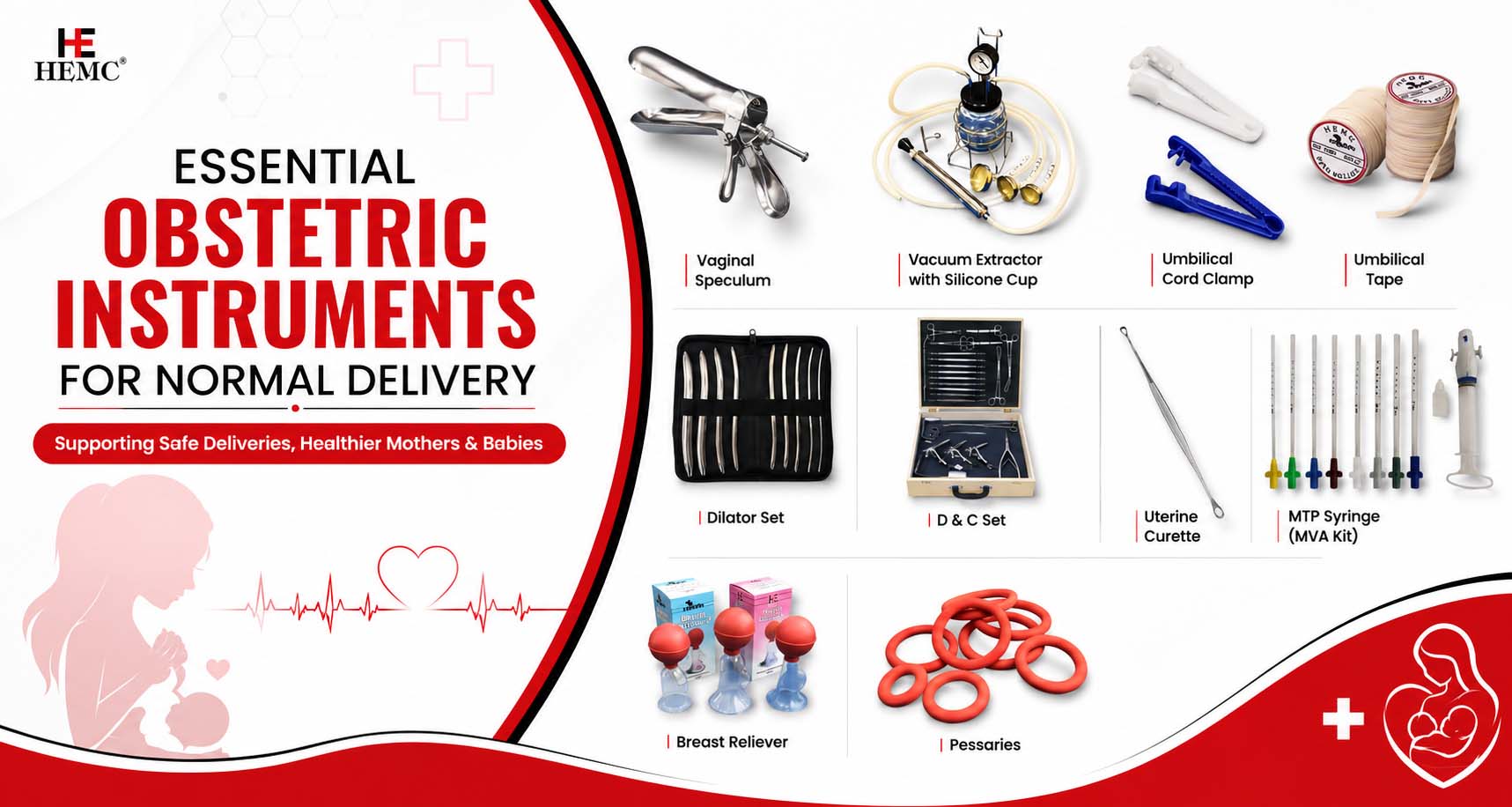
The Vaginal Speculum is one of the most fundamental instruments used in obstetrics and gynaecology. It gently separates the vaginal walls, allowing healthcare professionals to examine the cervix and vaginal canal.
Common Uses
- Cervical examination
- Assessment during labour
- Collection of cervical samples
- Detection of infections
- Minor gynaecological procedures
Available in various sizes and designs, vaginal speculums are manufactured from stainless steel or disposable medical-grade plastic depending on clinical requirements.
Umbilical Cord Clamp
Immediately after childbirth, the newborn’s umbilical cord must be securely clamped before cutting. An Umbilical Cord Clamp is specially designed to occlude blood flow through the cord while preventing accidental reopening.
Benefits
- Prevents neonatal blood loss
- Easy single-handed application
- Sterile and disposable
- Secure locking mechanism
- Reduces infection risk
Umbilical cord clamps have become standard equipment in every maternity ward and delivery room.
Umbilical Tape
An Umbilical Tape serves as an alternative or supplementary method for ligating the umbilical cord. It is made from soft woven cotton or synthetic material that securely ties the cord without causing tissue damage.
Applications
- Cord ligation
- Surgical procedures
- Vascular identification
- Obstetric surgeries
Umbilical tape is widely appreciated for its flexibility, softness, and ease of handling during delivery.
Vacuum Extractor
A Vacuum Extractor is an assisted delivery device used when labour is prolonged or when maternal pushing becomes insufficient. It helps guide the baby’s head through the birth canal using controlled suction.
Indications
- Prolonged second stage of labour
- Maternal exhaustion
- Non-reassuring fetal heart rate
- Need to shorten delivery time
When used correctly by trained obstetricians, vacuum extraction can reduce the need for emergency caesarean delivery.
Silicon Suction Cups
Silicon Suction Cups are soft, flexible cups used with vacuum extraction systems. Compared to traditional metal cups, silicone versions provide gentler traction while reducing scalp injuries in newborns.
Advantages
- Soft and flexible
- Improved patient comfort
- Reduced fetal scalp trauma
- Better adaptability to fetal head contours
- Disposable and sterile options available
Silicone suction cups have become increasingly popular in modern obstetric practice.
MTP Syringe (MVA Kit)
Although MTP Syringe (MVA Kit) is primarily associated with uterine evacuation procedures, it is an important component of comprehensive obstetric and gynaecological care.
The Manual Vacuum Aspiration (MVA) Kit provides a safe, portable method for uterine evacuation in selected clinical situations.
Common Uses
- Early pregnancy management
- Incomplete miscarriage
- Retained products of conception
- Endometrial sampling
Its portable design makes it especially useful in hospitals, emergency departments, and healthcare facilities with limited resources.
Dilator Set
A Dilator Set consists of graduated instruments designed to gently dilate the cervical canal before various obstetric and gynaecological procedures.
Applications
- Cervical dilation
- Diagnostic procedures
- Surgical preparation
- Dilation before uterine evacuation
The gradual increase in diameter allows controlled cervical expansion while minimising tissue trauma.
D & C Set
The D & C Set (Dilatation and Curettage Set) contains specialised instruments used for procedures involving cervical dilation followed by removal of tissue from the uterine lining.
Components May Include
- Cervical dilators
- Uterine curettes
- Sponge holding forceps
- Uterine sound
- Dressing forceps
Although not used during routine normal delivery, a D & C Set is essential in obstetric units for managing retained placental tissue, postpartum complications, and certain diagnostic procedures.
Uterine Curette
A Uterine Curette is designed to scrape or remove tissue from the uterine cavity.
Clinical Uses
- Removal of retained products
- Endometrial biopsy
- Diagnostic curettage
- Postpartum management
Available in sharp and blunt designs, uterine curettes are selected according to the clinical indication.
Breast Reliever
Successful breastfeeding begins immediately after childbirth. A Breast Reliever is designed to reduce nipple congestion and breast engorgement, making it easier for newborns to latch effectively.
Benefits
- Relieves breast swelling
- Improves breastfeeding comfort
- Assists proper latching
- Reduces nipple discomfort
- Encourages successful breastfeeding
Breast relievers support early breastfeeding, which is recommended for both maternal and neonatal health.
Pessaries
Although Pessaries are generally associated with pelvic floor disorders and cervical support during pregnancy, they remain an important device in obstetrics and gynaecology.
Common Applications
- Pelvic organ prolapse
- Cervical support
- Stress urinary incontinence
- Selected high-risk pregnancies
Different pessary designs are available to suit individual patient needs.
Additional Instruments Commonly Found in Labour Rooms
Besides the primary instruments mentioned above, labour rooms are usually equipped with:
- Obstetric forceps
- Episiotomy scissors
- Sponge holding forceps
- Artery forceps
- Cord scissors
- Kidney trays
- Stainless steel bowls
- Sterile dressing sets
- Delivery trays
- Suction apparatus
- Foetal Doppler
- Neonatal resuscitation equipment
Together, these instruments help healthcare professionals manage both routine and emergency situations during childbirth.
Importance of High-Quality Obstetric Instruments
Medical professionals depend on reliable instruments every day. High-quality obstetric equipment offers several benefits:
Improved Patient Safety
Precision-manufactured instruments minimise procedural risks and improve clinical outcomes.
Better Infection Control
Stainless steel surgical instruments withstand repeated sterilisation without compromising performance.
Enhanced Durability
Premium-grade stainless steel provides long service life, corrosion resistance, and excellent reliability.
Superior Clinical Performance
Ergonomic designs improve handling, precision, and comfort during procedures.
Sterilisation and Maintenance
Proper maintenance ensures long-lasting performance and patient safety.
Healthcare facilities should follow these best practices:
- Clean instruments immediately after use.
- Use approved enzymatic cleaning solutions.
- Inspect instruments for wear or damage.
- Sterilise according to hospital protocols.
- Store instruments in dry, sterile conditions.
- Replace damaged or worn components promptly.
Routine maintenance helps preserve instrument functionality while reducing the risk of healthcare-associated infections.
Choosing the Right Obstetric Equipment Supplier
Selecting a trusted manufacturer or supplier is just as important as choosing the right instruments. Consider the following factors:
- High-quality medical-grade stainless steel
- Compliance with international quality standards
- Precision manufacturing
- Reliable after-sales support
- Wide product range
- Competitive pricing
- Consistent product availability
Partnering with a reputable supplier ensures dependable instruments that support safe and effective maternal care.
The Future of Obstetric Care
Technological advancements continue to improve obstetric practice through ergonomic instrument designs, safer disposable products, and enhanced infection-control measures. Innovations in assisted delivery devices, neonatal care equipment, and minimally invasive procedures are helping healthcare professionals deliver better outcomes for mothers and babies.
As healthcare systems continue to evolve, investing in quality obstetric instruments remains essential for providing safe, efficient, and patient-centred maternity care.
Conclusion
Safe and successful normal delivery relies on the expertise of healthcare professionals supported by dependable obstetric instruments. Equipment such as the Vaginal Speculum, Umbilical Cord Clamp, Umbilical Tape, Silicon Suction Cups, Vacuum Extractor, and Pessaries each plays an important role in comprehensive maternal healthcare. Whether used during labour, postpartum management, or associated obstetric and gynaecological procedures, these instruments contribute to improved safety, efficiency, and patient outcomes.
Hospitals and maternity centres that invest in high-quality, well-maintained obstetric equipment are better prepared to provide exceptional care throughout the childbirth journey. By combining skilled clinical practice with reliable medical instruments, healthcare providers can ensure safer deliveries, healthier mothers, and brighter beginnings for newborns.